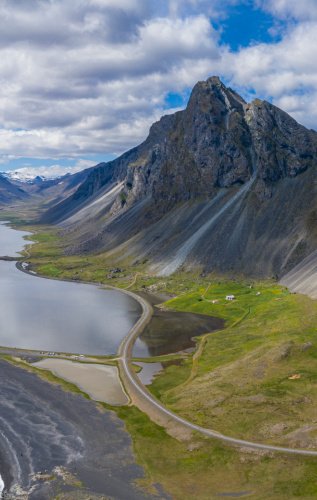
Fresh water is abundant in Iceland and generally unpolluted. Both surface water and groundwater come from precipitation - including snowfall that feeds the glaciers. Surface water appears at the Earth’s surface as lakes, ponds, rivers, and streams.
The permeability of rock layers varies with the age of Iceland’s bedrock. Permeability is highest in the active volcanic zones, where young rock and deep fissures dominate. Groundwater forms when water seeps into the ground through cracks and cavities in the rock, sometimes reaching great depths. When this groundwater meets hot intrusive rock it warms, rises, and can create geothermal areas.
Reliable access to water is fundamental to life in Iceland, and its uses are diverse. Aquifers supply drinking water, geothermal water heats homes, and the energy of glacial rivers and geothermal steam generates electricity. Rivers and lakes also support a rich variety of aquatic life.
About 96% of Iceland’s drinking water comes from groundwater. Thanks to the largely basaltic bedrock, Icelandic water has a low mineral content compared with many other countries. Drinking water is typically soft (low in calcium and magnesium) and falls within an alkaline pH range of 6.5–9.5. Tap water quality is closely monitored, so it is safe to drink straight from the tap across Iceland—and it’s free.
Access to clean drinking water is recognized internationally as a basic human right. Iceland adopted the EU Water Framework Directive (2000) in 2007, which sets rules for water abstraction, protection, and monitoring. National laws explicitly prohibit water pollution. The Environment Agency of Iceland, together with municipal health boards, oversees protection areas and monitoring, while the Icelandic Meteorological Office is responsible for hydrological research.