
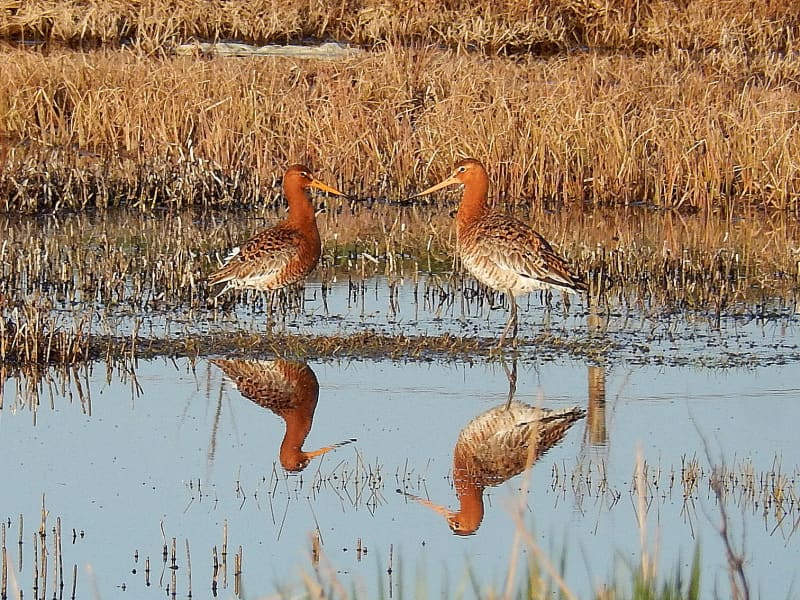
The Flói Bird Reserve
Northwest to the town of Eyrarbakki is a wetland area, rich in birdlife. The reserve has walking paths and a bird hide, an ideal spot for bird watching. The Flói Bird Reserve is listed in the Bird Life international Association. The Reserve is characterized by its flood meadows and numerous small ponds. Approximately 70 species of birds have been recorded in the Reserve. During spring and autumn migration Greylag Geese and White-fronted Geese can be found as well as Wigeon and Tufted Duck and various waders such as Snipe and passerines like Wheatear. During winter, birds, chiefly gulls and sometimes Long-tailed Duck and Common Eider, are concentrated in the estuary of the river Ölfusá. Whooper Swan, Teal, Mallard and Goosander are attracted to open water in winter.
View
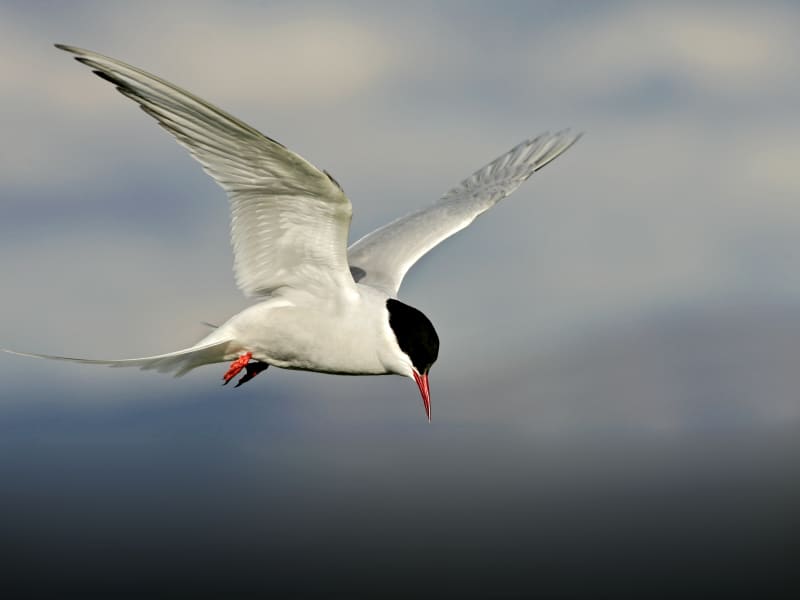
Birds of South Iceland
Birds of South Iceland is a program offering excellent year-round services for birdwatchers. South Iceland has a great deal to offer visiting birdwatchers with its wide variety of habitats, including wetlands, seabird colonies, highland oases, and unique coastlines. The largest colonies of puffins, pink-footed geese, and great skuas in the world are located within this region, together with Europe's largest leach's storm-petrel colony. South Iceland has a wide range of accommodation, from campsites to 4-star hotels, some within a short distance from Reykjavik.
More information about Birds and birdwatching in Southern Iceland here.
View
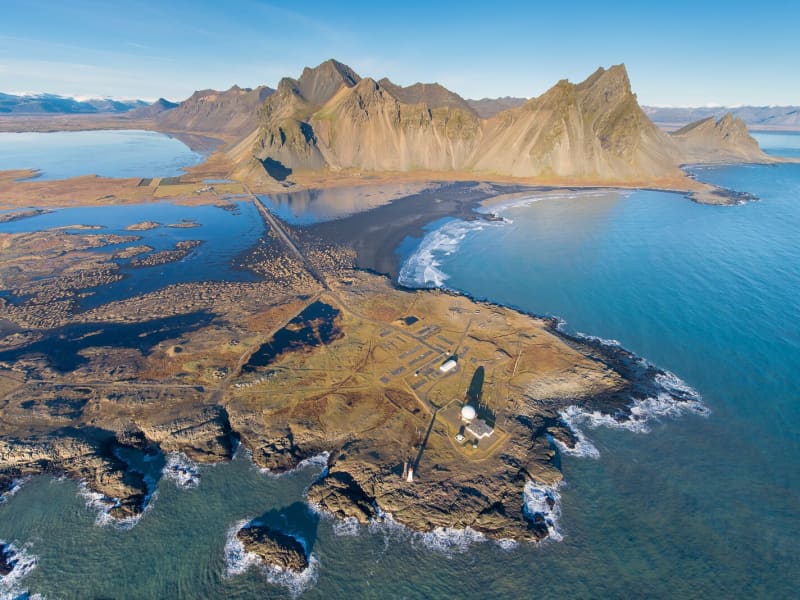
Vestrahorn
Vestrahorn is a 454-metre mountain on the Stokksnes peninsula, about a ten-minute drive from Höfn. The area is known for its dark sand beaches, rocky shoreline, and views of the mountain rising above the coast.
Vestrahorn is also a notable geological site, made mainly of gabbro with some granophyre. East of the mountain is Brunnhorn, a distinctive outcrop that extends towards the sea.
The area has historical connections to one of Iceland’s early settlement farms, Horn. During the Second World War, it was used as a British army base, and a NATO radar station was later built at Stokksnes. Visitors may also see seals on the sand, but sightings are not guaranteed.
View
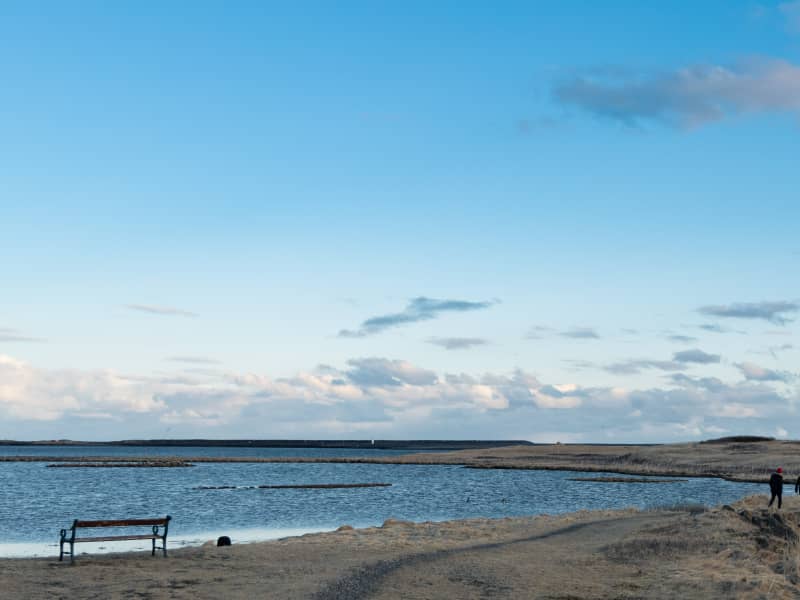
Ósland
Ósland is a conservation area by the harbour in Höfn, connected to the mainland by a man-made land bridge. The area is well suited for a short walk, with trails around Óslandstjörn pond and along the shoreline.
Ósland has rich birdlife, especially during the nesting season when Arctic terns are common. Visitors can also see Óslandshæð, a hill with a memorial to fishermen and an information board about the local nature.
A nature trail in the area presents the solar system at a reduced scale, showing the planets in proportion to their size and distance. Basalt rock in Ósland also contains visible impressions of ancient trees that were covered by lava.
View
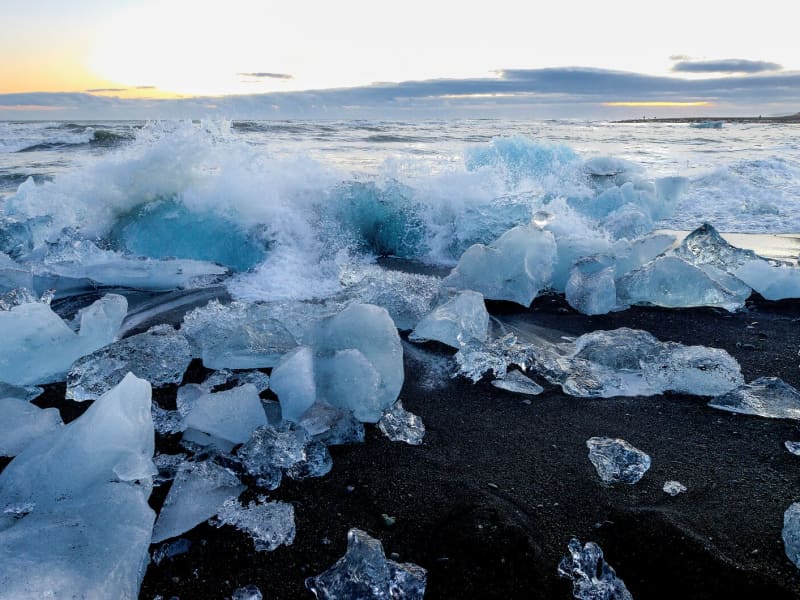
Breiðamerkursandur - Fellsfjara
Fellsfjara is a black-sand beach next to Jökulsárlón Glacier Lagoon, within Vatnajökull National Park. Ice from the glacial lagoon is carried by the river towards the sea, then washed back onto the beach by the tides.
The scattered ice pieces across the black sand make the area a popular spot for photography, especially when the light reflects through the ice. Conditions change with the tide, weather, and season, so the amount and position of ice on the beach vary.
The name Breiðamerkursandur refers to the large glacial outwash plain south of the glacier Breiðamerkurjökull. Fellsfjara refers to the coastline itself. The place has been nicknamed The Diamond Beach by international visitors.
Visitors should take care near the shoreline. Never climb onto the ice, stay away from ice close to the sea, and always keep watch for waves, which can come in unexpectedly.
View
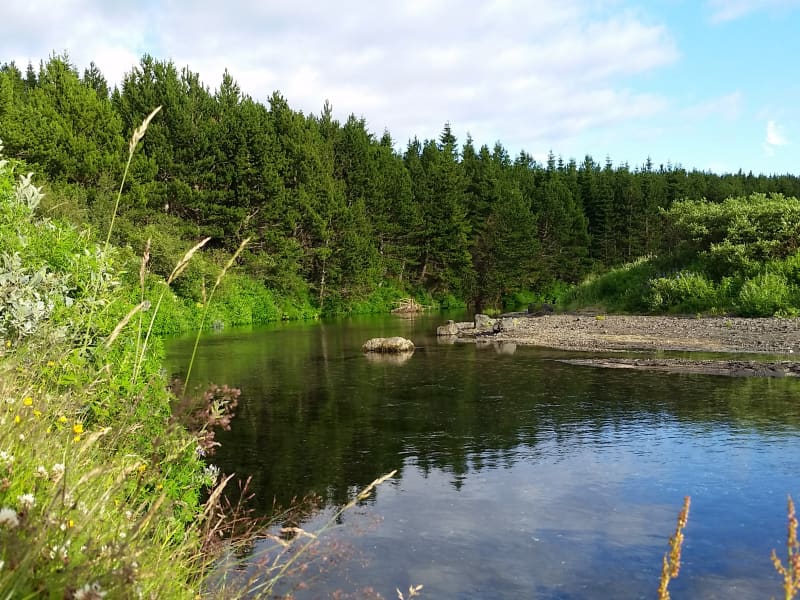
Þjórsárdalsskógur Forest
The natural setting of the forest follows a varied landscape of intense contrasts, from flowering forests to unripe ash hake from Hekla. The forest is mostly birch and spruce, pine, and larch mixed forests. An ideal place for outdoor activities, as there are many marked and unmarked paths and forest roads in the woods.
Þjórsárdalsskógur lies west of Highway 32, where it goes east towards Búrfellsvirkjun. You can get into the forest from Ásólfsstaðir and also via a bridge over Sanda, a short way into the valley. The campsite in Þjórsárdalur is in between and is well marked.
In Þjórsárdalur, the forest stretches far up the slopes, the landscape is beautiful and varied, and it has a true fairytale atmosphere. There are numerous marked and unmarked paths and trails in the forest for travelers and hikers, rivers to swim in, and lava to explore. In the area, there are paths for wheelchairs, good camping, and a swimming pool in Árnes, about 15 kilometers down in the countryside.
Source: skoraekt.is
View
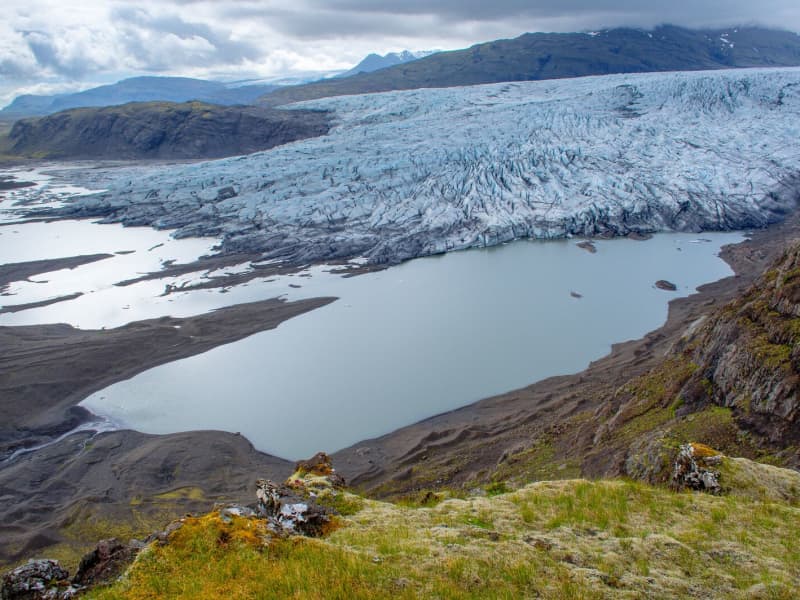
Fláajökull Glacier
Fláajökull is an outlet glacier of Vatnajökull in the southern part of Vatnajökull National Park, about 40 km west of Höfn. The area can be reached from Road 1 via a side road between Hólmur and Lambleiksstaðir, then a 6 km gravel road to the car park.
The glacier and surrounding landscape clearly show how ice has shaped the lowlands over time. Fláajökull reached its greatest known extent in 1894, after centuries of glacier advance during the colder period known as the Little Ice Age. Today, visitors can explore marked routes and information panels about the area’s history and geology.
There is also access from Haukafell forestry , with a footpath leading towards Fláajökull. Overnight stays are not allowed at the Fláajökull car park, and visitors should check road, trail, and weather conditions before traveling.
View
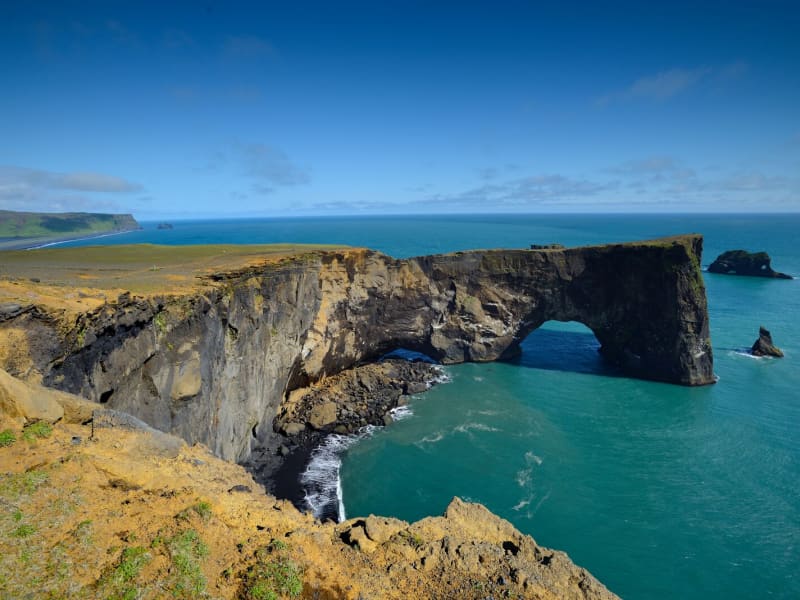
Dyrhólaey
Dyrhólaey is a nature reserve. The protected areas are necessary to ensure protection while ensuring public rights. Some areas are closed for part of the year to preserve wildlife, others are closed all year round due to sensitive natural monuments, traffic is also limited in some areas to people, and others are open all year round.
More information about DyrhólaeyDyrhólaey is a 120-meter high promontory not far from Vík. The place got its name from the massive arch that the sea has eroded from the headland. When the sea is calm, big boats can sail through it. A maniacal daredevil pilot has even flown through the arch with a small-craft airplane!
From the top of Dyrhólaey, there is a great view. The headland is thought to have been made in an underwater volcanic eruption late in the glacial period, not unlike the eruption of Surtsey. Several outcrops are in the sea; the highest one, called Háidrangur ("High column"), is 56 m. high. Dyrhólaey has been a natural reserve since 1978.
The promontory is widely known among sailors as "Portland" and English trawler fishermen beach where one can climb (at your own risk). According to legend, the Reynisdrangar needles were formed when two trolls tried dragging a three-masted ship to land. When daylight broke, they turned to stone. The Needles can be seen clearly from the village of Vík and are 66 meters above sea level at their highest.
In one of the many caves here – there is a local legend about a monster having lived here for many centuries. The monster seems to have disappeared after a landslide over 100 years ago…used to call it a "Blow hole." There are also unique rock formations all along the Birdlife here is abundant, with puffins and eider ducks being the most common species in the area. On top of the cliff, the lighthouse stands impressive and stoic in this often very windy area. Be careful not to go too close to the ledge of this dramatic cliff.
View
Heinaberg
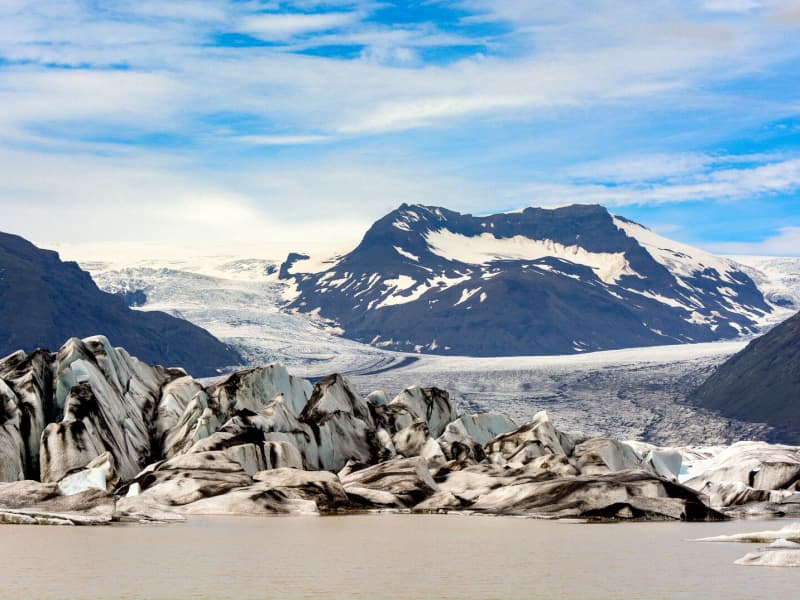
Heinaberg is a beautiful area that consists of Heinabergsjökull glacier, the glacial lagoon Heinabergslón, where you can go kayaking among the icebergs during summer, and stunning landscape. The Heinaberg area is part of Vatnajökull National Park.
The gorgeous glacial lagoon of Heinaberg, Heinabergslón, is accessible by car and is often studded with large chunks of glacier that break off the Heinabergsjökull glacier. The area offers excellent conditions for hikers, as it has several interesting hiking trails, along which one can see waterfalls, ravines, volcanic intrusions, and even, on a lucky day, a reindeer.
The gravel road from road no 1 to the glacial lake is not in service during the winter months. Therefore, one needs to be aware of changes in road conditions and accessibility.
Vatnajökulsþjóðgarður
View
Fishing in Landmannaafréttur
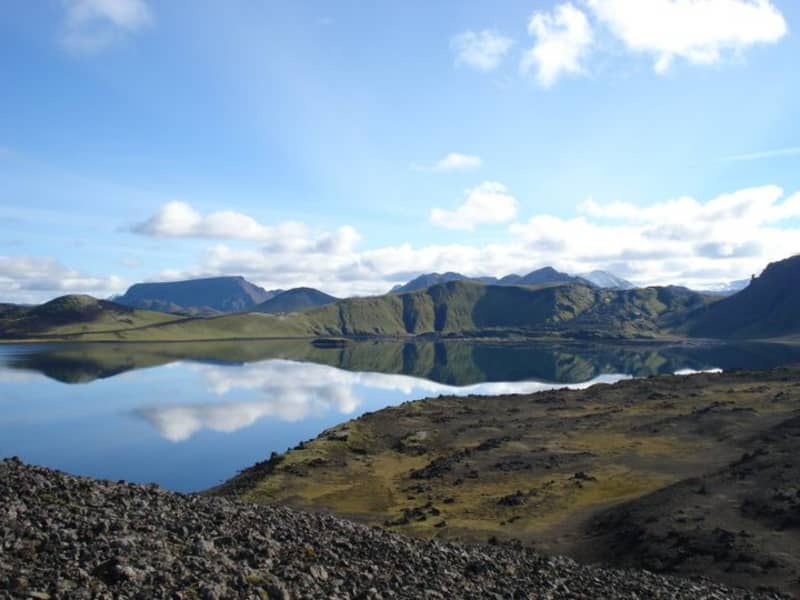
Many other lakes, apart from Veiðivötn, are located south of Tungnaá, and fishing permits for twelve of them can be bought from the wardens at Landmannahellir.
These are the lakes Blautuver, Dómadalsvatn, Eskihlíðarvatn, Frostastaðavatn, Herbjarnarfellsvatn, Hnausapollur (Bláhylur), Hrafnabjargavatn, Kílingavötn, Lifrafjallavatn, Ljótipollur, Löðmundarvatn and Sauðleysuvatn. Ljótipollur and Hnausapollur are the youngest of these lakes, with the former dating from 1477 and the latter from 871.
Most of these are closed lakes, although Helliskvísl flows out from Löðmundarvatn, and Blautuver and Klingavötn are connected to Tungnaá. Only trout is caught in Ljótapollur, Herbjarnarfellsvatn, Lifrarfjallavatn and Dómadalsvatn. Trout and Arctic char is caught in Blautuver, Frostastaðavatn and Kílingavötn, but only Arctic char in other lakes.
View
Ingólfshöfði
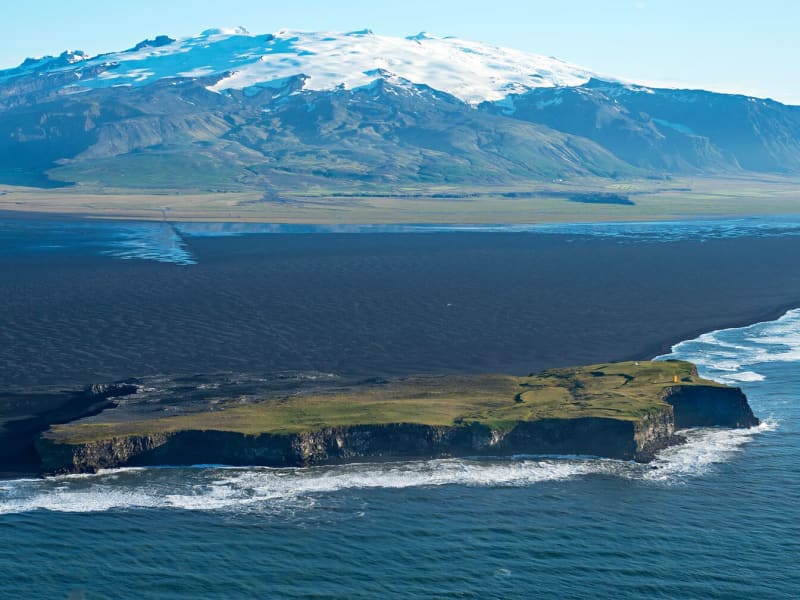
At the edge of the Atlantic Ocean, Ingólfshöfði is a headland isolated by black sands and perilous rivers from the rest of the mainland.
This historical cape is named after the first settler of Iceland, Ingólfur Arnarson, who spent his first winter there with his family after moving to Iceland, 874-875 A.D.
However, it´s home to thousands of nesting seabirds and gulls, especially puffins and the great skua. Ingólfshöfði is only accessible by organized tours.
View
Haukafell
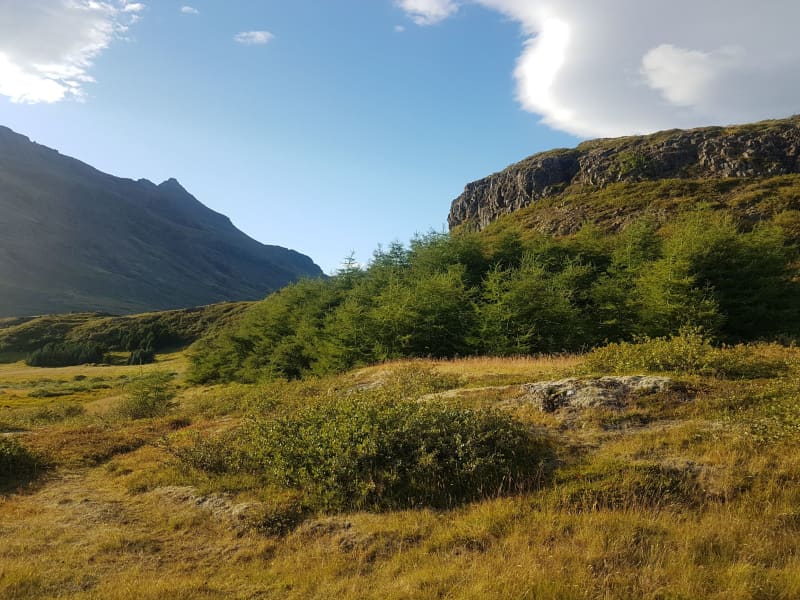
Haukafell is a forestry and outdoor recreation area east of Fláajökull glacier in southeast Iceland. The forestry project began in 1985 and now provides shelter for low-growing vegetation, including berry bushes that are usually ripe in August.
The area is used by locals and visitors for hiking and nature enjoyment. Several trails lead through the sheltered landscape, and a marked hiking route connects Haukafell with Fláajökull, crossing the Kolgrafardalsá river on a footbridge.
Haukafell is close to Road 1 and has a campsite in a scenic setting. Visitors planning to hike towards Fláajökull should check the weather and trail conditions before setting out, as conditions can change quickly near glacier areas.
View
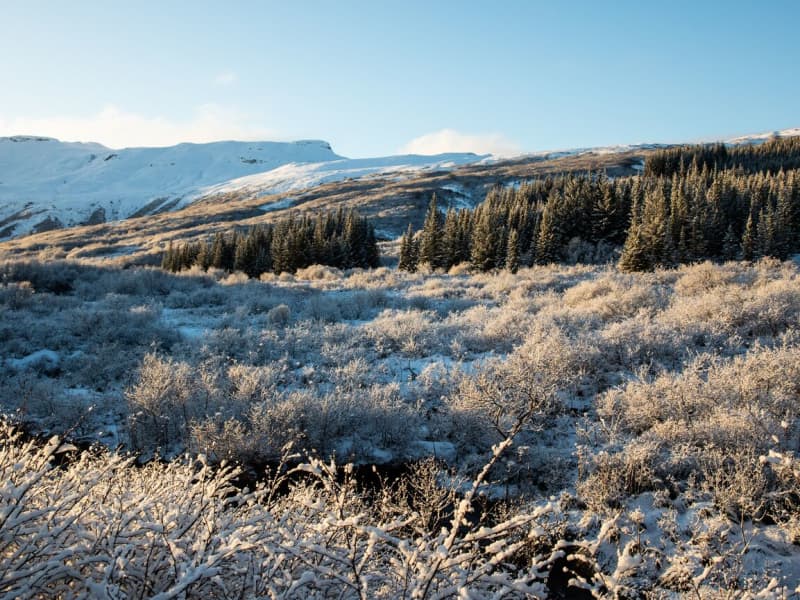
Haukadalsskógur Forest
Haukadalsskógur is a lush and expansive forest in Haukadalur valley, just a short drive from the famous Geysir geothermal area. Known for its tranquil atmosphere and diverse plant life, the forest offers a unique contrast to the dramatic geothermal landscapes nearby, making it a perfect stop for those seeking peace and natural beauty.
One of the largest national forests in South Iceland, Haukadalsskógur is also the most extensively planted of all Iceland’s national forests. It stands as a remarkable example of long-term reforestation, with planting efforts dating back to the early 20th century. Today, the forest features a rich mix of native birch and imported conifer species, creating a varied and shaded environment ideal for walking, picnicking, and nature observation.
The forest's outdoor facilities are well-developed and thoughtfully maintained. Among its standout features is a specially designed wheelchair-accessible trail, created in close cooperation with Sjálfsbjörg, the local association for people with disabilities in Iceland. This makes Haukadalsskógur an inclusive destination where everyone can enjoy the beauty of the outdoors.
View
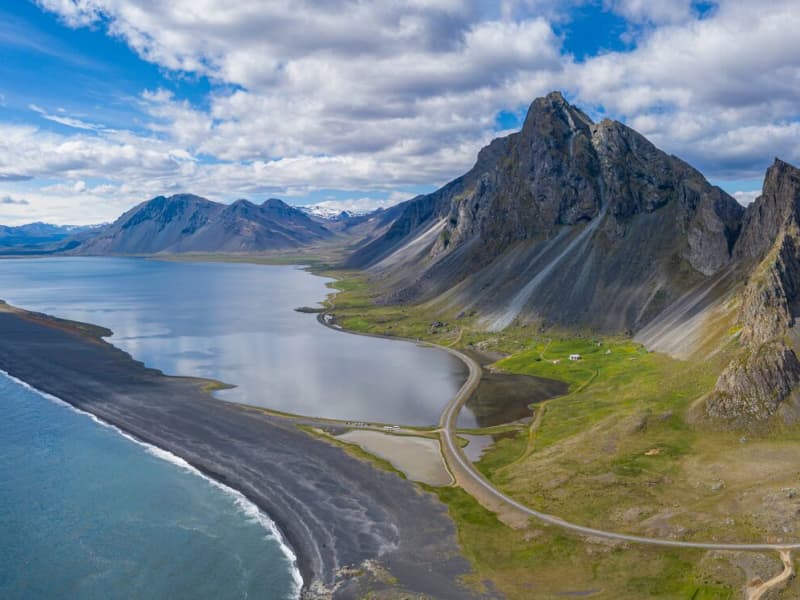
Hvalnes
Hvalnes is a small peninsula with a black pebble beach stretching for a few kilometers. Sitting on its tip is a picturesque old, yellow lighthouse and an old turf farm with the same name as Hvalnes.
The beach stretches for a few kilometers and would make a nice walk, or you can hang out on the beach and enjoy the view. It is an excellent location for bird watching and photography.
View

Jökulsárlón glacial lagoon
Jökulsárlón is a glacial lagoon beside the Ring Road, within Vatnajökull National Park. It is fed by Breiðamerkurjökull, an outlet glacier of Vatnajökull, and is known for the icebergs that drift across the lagoon before floating towards the Atlantic Ocean.
The area is one of the most popular stops in South Iceland, with views of blue-tinted ice, the glacier edge, and the nearby black sand beach where ice is often washed ashore. Seals can sometimes be seen in the lagoon or resting on the ice, but sightings vary by season and conditions.
Jökulsárlón is accessible year-round from Road 1, and there is a café by the lagoon. Visitors can also follow a marked hiking trail between Jökulsárlón and Fjallsárlón. Never step onto floating ice in the lagoon, as it can roll over or break apart without warning.
Vatnajökulsþjóðgarður
View
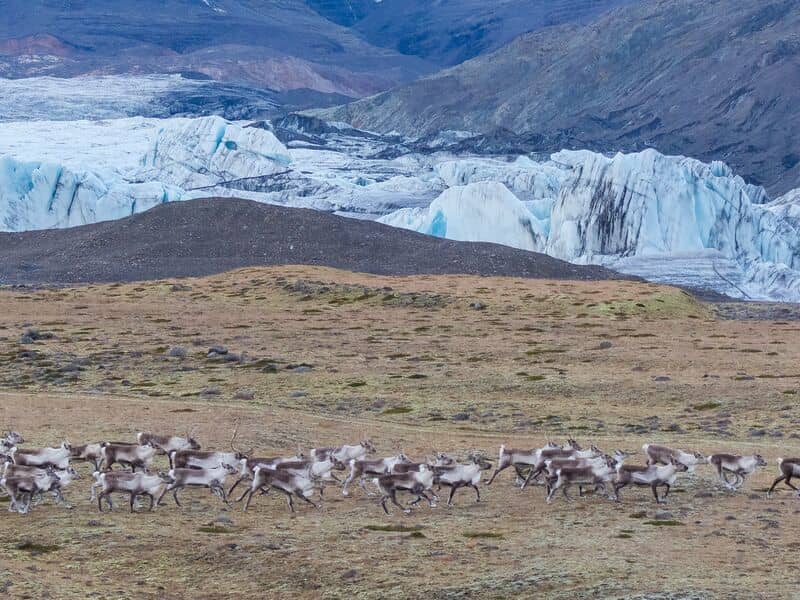
Hoffell
Hoffell is a farmland and glacier area about 20 km from Höfn in southeast Iceland, and partially within Vatnajökull national park. The area is known for Hoffellsjökull, an outlet glacier of Vatnajökull, as well as gabbro rock, geothermal water, rivers, outwash plains, and mountain views.
Visitors can explore several hiking routes around Hoffellsjökull and Geitafellsbjörg, with views of the glacier and its lagoon. From Road 1, a 3 km paved road leads to Hoffell Guesthouse and Hoffell geothermal Baths.
To reach the Hoffellsjökull car park, visitors continue along a 4 km gravel road. The road is rough and can be difficult for ordinary cars, so a four-wheel-drive vehicle is recommended. Overnight stays are not allowed at the Hoffellsjökull car park, and hikers should check trail, road, and weather conditions before setting out.
View