Quick photography tips
If you want photos, the essentials are simple: a tripod (for long exposures) and ideally a wide-angle lens to capture both sky and landscape.

Or try searching by Category and/or Location
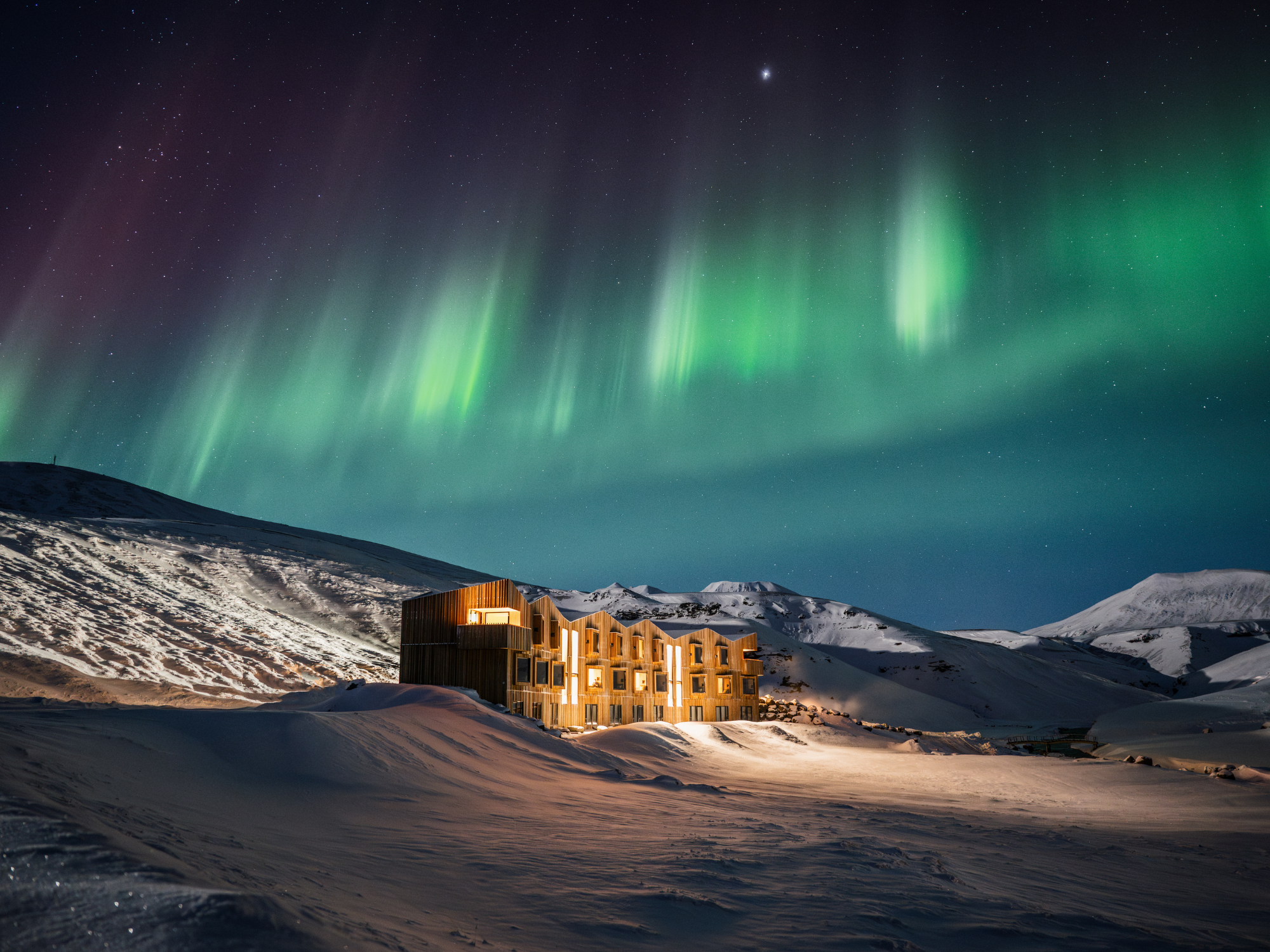
The Northern Lights are one of nature’s most impressive light shows and a highlight of winter travel in Iceland. Also known as the aurora borealis, they appear when electrically charged particles from the sun travel toward Earth and collide with atoms and particles in the upper atmosphere. Those collisions release energy as light. The colours you see depend on which gases are excited and at what altitude: oxygen typically produces the most common green/yellow-green tones (around 90–200 km), while nitrogen can create blue, purple, and red hues.
In Iceland, aurora viewing is most promising from September through April, when nights are long and dark. They can also be visible as early as August, as soon as the sky becomes dark enough and conditions are favourable.
What matters most is not a specific month, but the combination of:

Check the forecast before you go. In Iceland, some of the most useful tools are:
Go where it’s dark. Even a short drive away from town lights can make a big difference. South Iceland is especially well-suited because it combines accessible roads with wide, open landscapes—ideal for scanning the sky.
South Iceland is ideal for aurora viewing because it offers wide-open landscapes and many areas with minimal light pollution—while still being accessible from the Ring Road. The most effective approach is to treat the aurora as a flexible evening activity:
Aurora hunting is easy to combine with daytime sightseeing: explore waterfalls, glaciers, geothermal areas, or towns during the day, then head out after dark when the forecast looks promising. You can weave Northern Lights viewing into any of our four main travel routes:
The Volcanic Way - The Golden Circle - The South Coast - The Lighthouse Trail
If you want photos, the essentials are simple: a tripod (for long exposures) and ideally a wide-angle lens to capture both sky and landscape.
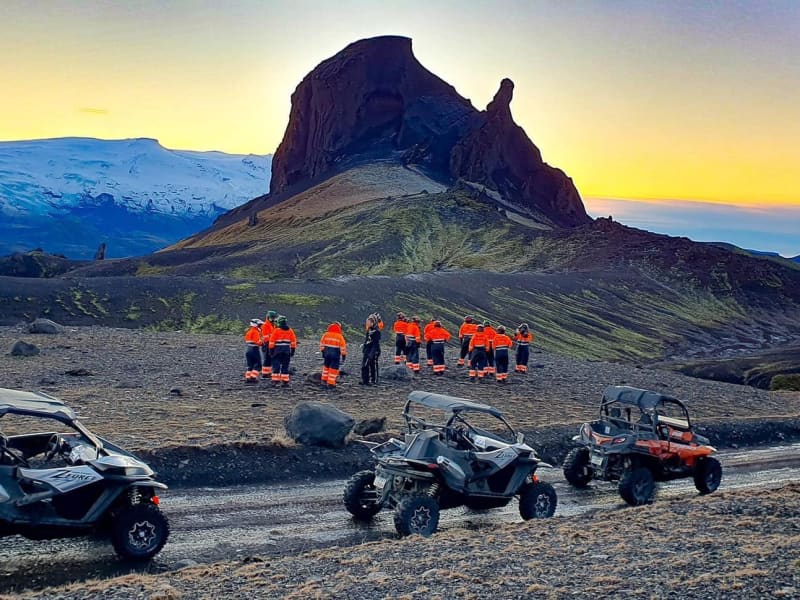
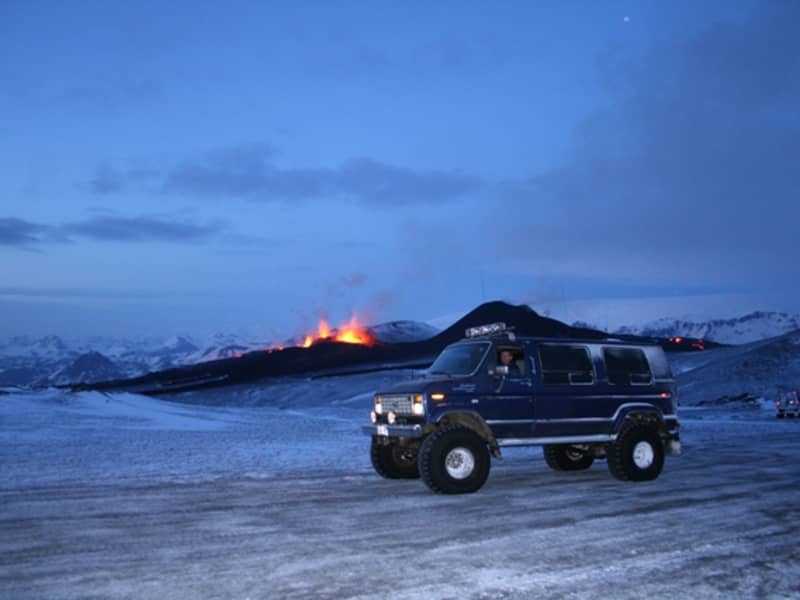
If you prefer expert help (or want to maximise your chances without driving), guided tours can be a great option. Guides monitor conditions and choose locations based on cloud cover and visibility.
| Nordictrails | Baldursgata 36 | 101 Reykjavík | 692-0240 |
| Martins Omolu | Framnesvegur 7 | 101 Reykjavík | 789-2033 |
| Iceland Pro Tour | Hvassaleiti 9 | 103 Reykjavík | 894-4069 |
| Enjoy Iceland Tours | Stefnisvogur 6 | 104 Reykjavík | 547-7300 |
| Spicy Viking Iceland | Langholtsvegur 147 | 104 Reykjavík | 868-4848 |
| Unreal Iceland | Mjóahlíð 16 | 105 Reykjavík | 848-8468 |
| Iceland Untouched | Meistaravellir 11 | 107 Reykjavík | 416-3100 |
| NorthStar Travel | Rauðagerði 46 | 108 Reykjavík | 655-5792 |
| Aurora Globe / Aurora Globe Tours | Háaleitisbraut 117 | 108 Reykjavík | 839-6912 |
| Sulayda | Leirubakki 10 | 109 Reykjavík | 770-7723 |
| Viking Offroad Expeditions | Skriðustekkur 14 | 109 Reykjavík | 6905520 |
| ExploraIslandia.com | Vallarás 5 | 110 Reykjavík | 781-4796 |
| Boreal Super Jeep Tours | Smiðshöfði 21 | 110 Reykjavík | 8646489 |
| Ottó the Viking | Flétturimi 1 | 112 Reykjavík | 788-3638 |
| Way To Iceland | Sjafnarbrunnur 1/201 | 113 Reykjavík | 888-2803 |
| D - Travel | Borgarholtsbraut 13 | 200 Kópavogur | 849-3466 |
| Icelandic Dream Tours | Gulaþing 23A | 203 Kópavogur | 896-0006 |
| BT Travel | Lyngás 1 | 210 Garðabær | 760-8000 |
| Iceland On Tour | Eskivellir 9a | 221 Hafnarfjörður | 856-9605 |
| Exploring Iceland | Fálkastígur 2 | 225 Garðabær | 519-1555 |
| Northern Lights Tours in Iceland ehf. | Brúarfljót 7e | 270 Mosfellsbær | 547-2222 |
| FaraGo | Asparskógar 15 | 300 Akranes | 783-5616 |
| IE / Icelandic Expeditions / See The Planet | Hafnarstræti | 400 Ísafjörður | 618-3027 |
| Glacier Travel | Silfurbraut 21 | 780 Höfn í Hornafirði | 863-9600 |
| Crystal Cave Tours | Kirkjubraut 59 | 780 Höfn í Hornafirði | 790-8707 |
| East Coast Travel | Hlíðartún 4 | 780 Höfn í Hornafirði | 849-3422 |
| EV Travel | Móstekkur 75 | 800 Selfoss | 773-4564 |
| GT Travel | Fossnes C | 800 Selfoss | 480-1200 |
| IceThor.is | Torfholt 8 | 806 Selfoss | 766-0123 |
| Pure Iceland | Sléttuvegur 3 | 870 Vík | 772-8595 |
| Southcoast Adventure | Austurvegur 20 | 870 Vík | 867-3535 |