
Skip to content

Or try searching by Category and/or Location

Reynisfjara Is Still Here – Here's What Visitors Need to Know

Over the past weeks, many social media posts have suggested that Reynisfjara Black Beach is “gone” or permanently damaged. That is not accurate. While natural forces have caused noticeable changes to parts of the beach, Reynisfjara remains open, accessible, and very much worth visiting.
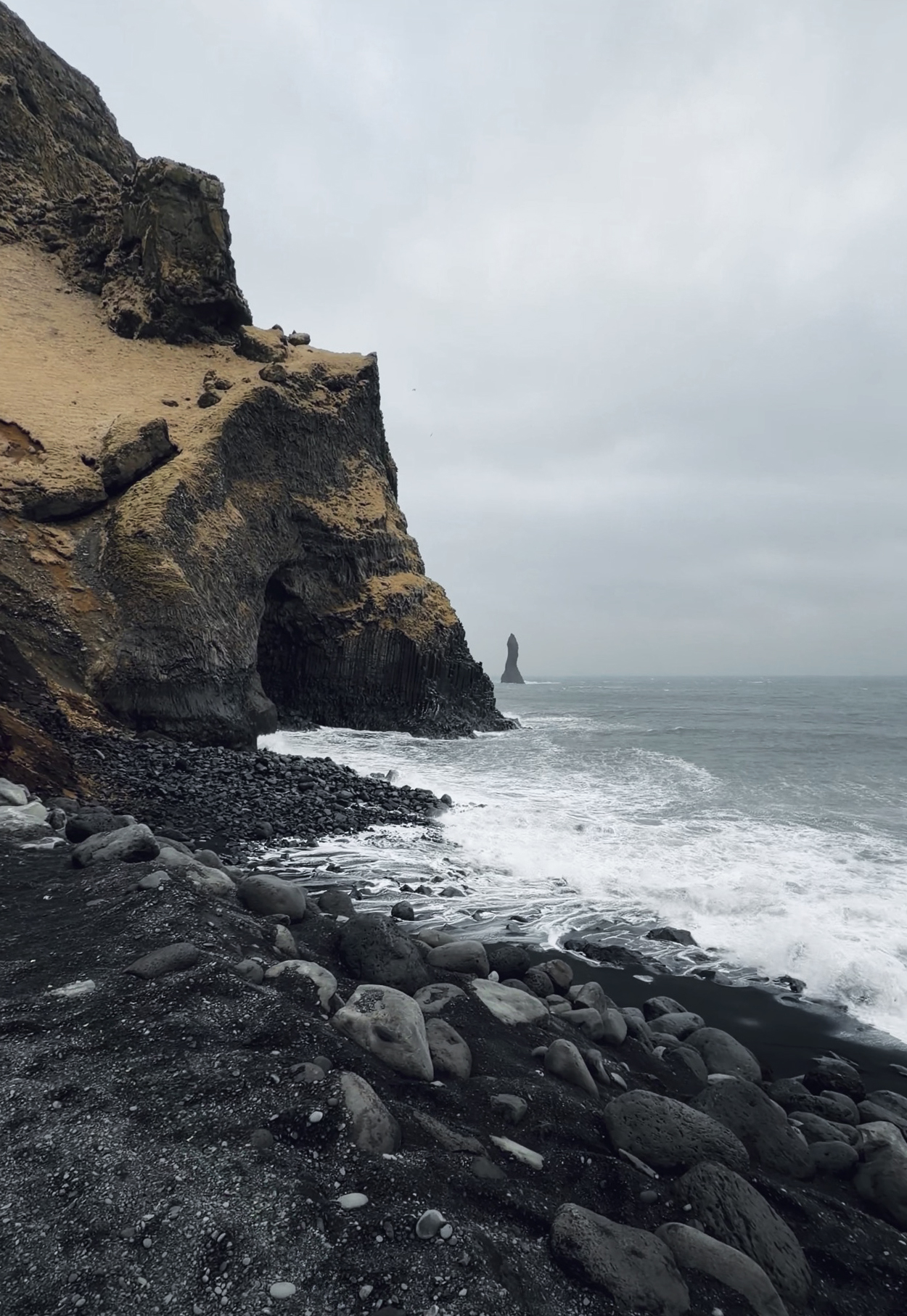
Waves crash hard against the towering basalt columns at Reynisfjara Black Beach. Photo: Þórir N. Kja…
Waves crash hard against the towering basalt columns at Reynisfjara Black Beach. Photo: Þórir N. Kjartansson

Icelandic landscapes are shaped by wind, waves, and weather. Reynisfjara Black Beach is no exception. Change is part of its nature. What visitors will find today is slightly different from what it looked like before, but the experience is still powerful and unique.

Reynisfjara has recently changed due to a combination of weather conditions, sustained wave energy, and high sea levels over an extended period. Rather than a single event, it was the interaction of strong low-pressure systems, wind direction, and persistent ocean swell that accelerated natural coastal erosion, shifting large volumes of black sand and reshaping parts of the shoreline.

What was unusual was not that change occurred, but how quickly it happened. Reynisfjara is a dynamic beach that naturally evolves over time, but recent conditions intensified a process that would normally unfold more gradually.

Here to the right you can see a recent photo that clearly shows how Reynisfjara has changed.

The image highlights how the shoreline has shifted and how parts of the sand have been reshaped by recent wave activity. While the contours look different, the beach remains wide, accessible, and continues to offer the same striking views and powerful atmosphere it is known for.

A recent photo taken at Reynisfjara Black Beach


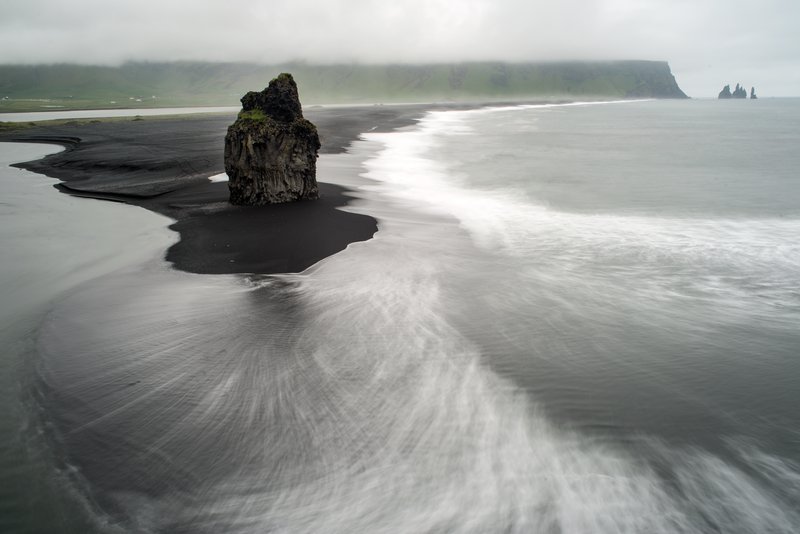
At the western end of Reynisfjara you can spot Háadrangur, a striking solitary rock pillar rising from the black sand. Photo: Haukur Snorrason

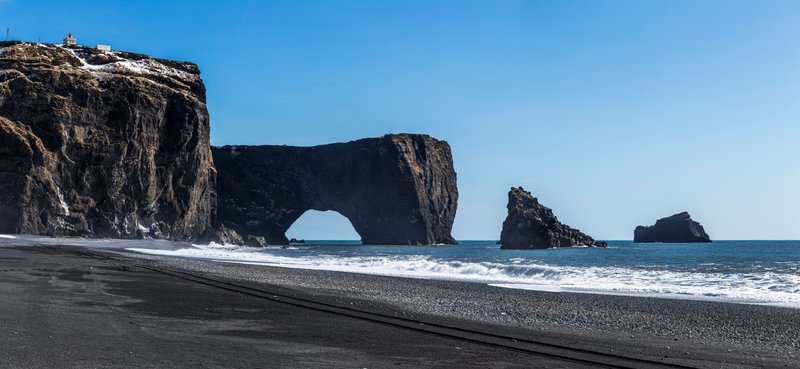
Dyrhólaey seen from the westen side of Reynisfjara Black Beach. Photo: Páll Jökull Pétursson

What You Can Still See and Experience

Reynisfjara is vast and open, offering multiple safe viewing opportunities:

• You can walk down to the shoreline and observe the Atlantic waves crashing against the dramatic basalt columns from a safe distance.
• By walking west along the beach, you can capture excellent photos of the iconic Reynisdrangar sea stacks rising from the ocean.
• There are beautiful views toward the arch at Dyrhólaey, nearby skerries, and the surrounding coastline.
• From the Dyrhólaey area, visitors can enjoy scenic views over the river outlet and, on clear days, toward Mýrdalsjökull glacier.
• The cliffs of Reynisfjall are home to seabirds, including a large puffin colony during summer.

The beach still offers striking contrasts between black sand, powerful waves, basalt formations, and wide open skies.

Facilities and Access

Visitors are welcome, and the main infrastructure remains in place:

• Parking facilities are open.
• Restrooms and the on-site restaurant are operating as usual.
• The entire area above the beach ridge remains safe and accessible.

Some adjustments to the viewing platform are expected. Landowners plan to rebuild it, either in the same location or in a slightly different position depending on how the landscape continues to evolve.

New signage, updated safety notices, and additional safety equipment are already in production and will be installed in spring.

A Landscape That Moves

Reynisfjara has always been shaped by natural forces. Storms shift sand. Waves reshape the shoreline. Cliffs erode and rebuild over time. This is part of what makes South Iceland so dynamic and fascinating.

The beach is gone and it continues to offer one of the most remarkable coastal experiences in Iceland.

Visitors are encouraged to come, explore responsibly, respect safety guidelines, and experience Reynisfjara as it is today, wild, powerful, and still unforgettable.


View this post on Instagram


A post shared by Rán Bjargar | Photographer in Iceland (@ranbjargar)