
A craft that came to stay
Knitting reached Iceland in the 16th century, most likely through foreign traders, and it quickly became part of daily life. Wool was one of the few resources the country had in abundance, and knitting turned it into something both useful and valuable.
Evenings in the baðstofa
For centuries, the heart of the Icelandic farmhouse was the baðstofa, the shared living and sleeping room. On long winter evenings the household gathered there for the the evening wake (kvöldvaka). One person read sagas or recited poetry aloud while everyone else worked wool: carding, spinning and knitting by lamplight. Men, women and children all knitted, and knitting was as much a part of the evening as the stories.
Socks and mittens for export
In the 17th and 18th centuries, hand-knitted socks and mittens were among Iceland’s most important exports. Farms produced them in large numbers and traders shipped them abroad. Some old designs are still knitted today, like mittens with two thumbs, made so they could be turned around when one side wore thin from work.
A living tradition
Knitting never went out of fashion in Iceland. Most children learn the basics at school, and it is common to see people knitting on the bus, at meetings or in cafés. Knitting groups meet in homes, libraries and cafés around the country, and new designers keep the craft moving, drawing on old patterns while creating their own.
South Iceland Wool Week
Every year in early October, South Iceland Wool Week (Ullarvika á Suðurlandi) brings knitters, farmers, spinners and designers together across the region. The programme includes workshops, farm and mill visits, talks and knitting gatherings, and each year a special Wool Week hat is designed and its pattern shared, so knitters can make it at home or wear it at the events. For visiting knitters, it is a chance to meet the people behind Icelandic wool and to knit alongside locals.
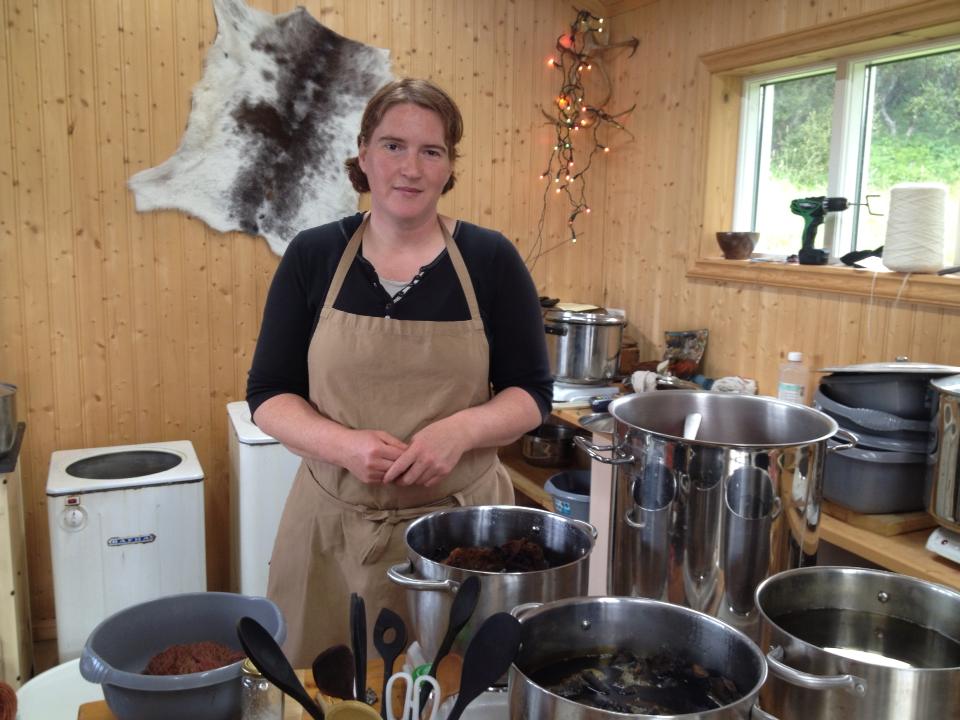
Icelandic wool simmering in a dye bath made from lupine,
the plant that turns large parts of the countryside purple in early summer. Photo Credit: Hespuhúsið
Read more: The Icelandic Sheep and Its Wool → / The Icelandic Lopapeysa →