
South Iceland is home to many charming towns and villages, each offering its own local character and useful services for travellers. Selfoss, the largest town in the region, is a main service hub with a wide selection of shops, restaurants, and accommodation.
Across the region, visitors will also find coastal villages, rural communities, and small service centres, some known for their history, others for geothermal activity, local culture, or nearby natural attractions. Several towns offer museums, swimming pools, geothermal baths, and excellent access to some of South Iceland’s most popular sights.
Whether you are looking for a convenient stop along the way, a taste of local life, or a base for exploring the surrounding area, South Iceland’s towns and villages offer a great mix of services, history, and atmosphere.

ÁRNES
Árnes is a growing settlement located approximately 100 km from Reykjavík and is part of the Golden Circle region. It offers a range of facilities, including the Árnes community center, Þjórsárskóli school, Neslaug swimming pool, a guesthouse, campsite, and a local store. A new sports hall is expected to be opened around mid-2026. Árnes takes its name from the island of Árnes in the Þjórsá river.
Árnes is the least populated center in the Uppsveitir area of Árnessýsla before heading into parts of the Icelandic Highlands, such as Sprengisandur, Fjallabak, and Landmannalaugar.
Many beautiful natural attractions can be found in the vicinity of Árnes, including Þjórsárdalur valley, Gjáin canyon, Hjálparfoss waterfall, and Háifoss waterfall. There are numerous scenic hiking trails in Þjórsárdalur and the nearby Þjórsárdalur forest, making the area ideal for outdoor recreation.
The area is also rich in history, with sites such as Stöng and the reconstructed Commonwealth-era farm located nearby.
A video introducing the municipality of Skeiða- og Gnúpverjahreppur can be viewed here.
View
ÁSAHREPPUR
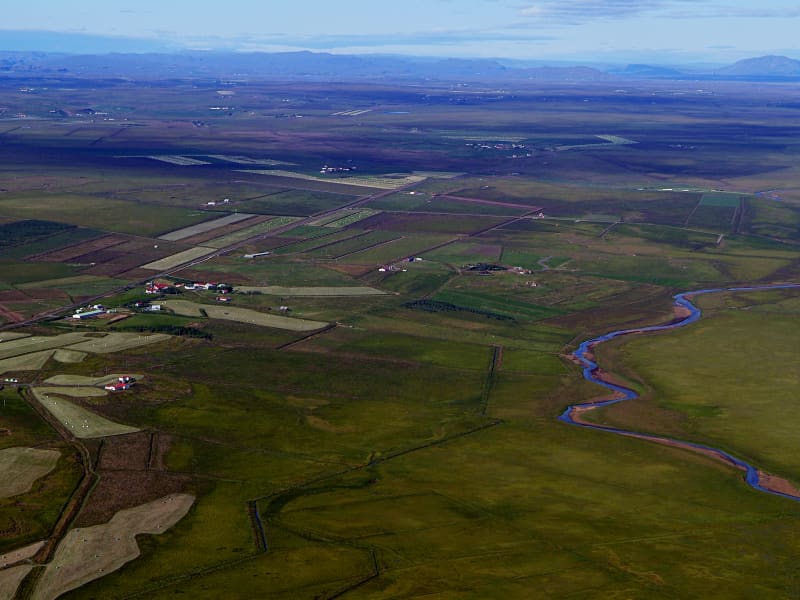
Ásahreppur is a community on the western edge of Rangárvallasýsla and takes its name from “the ásar”, natural ridges in the area. On the Ring Road the community has its limits from the bridge of Þjórsá river in the west and to the east the boundary is about 500 m from Landvegamót. There has been a bridge across Þjórsá since 1895. Ásahreppur has about 170 inhabitants who have agriculture and service as their main employment. The nature varies between grassy swamps, reclaimable land, farm areas, hills and ridges. The biggest nesting place of the grey lag goose is in the swampy desolated area of Frakkavatn. The structure of habitation is mostly clusters of farms around the ridges, Vetleifsholtscluster, Áscluster, Ásmundarstaðircluster, Hamracluster, Sumaliðabæjarcluster, and Kálfholtscluster. In the area of Ásahreppur there are many artificial caves, used as animal houses up to the 20th century, but in the first centuries after the settlement of Iclenad it is said they were used for human habitation. Schools and other basic service for the inhabitants of Ásahreppur are kept up in good co-operation with their neighbouring communitys in Rangárvallasýsla, Skaftárhreppur and Mýrdalshreppur.
View
BORG
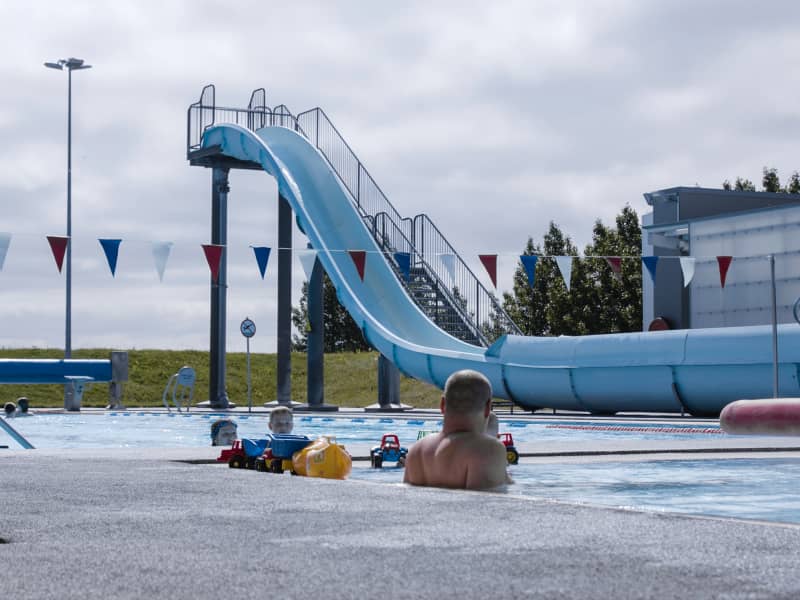
Borg in Grímsnes is a growing community offering a wide range of services for both locals and visitors, including schools, kindergartens, social homes, shops, accommodation, and camping sites. The village has a gym and an impressive swimming pool with steam facilities, slides, hot tubs, and a shallow pool, and the community center hosts a variety of cultural activities and events.
Borg is located about 70 km from Reykjavík, in a central position on the Golden Circle and close to well-known natural gems, various services, and entertainment. Nearby you will find Kerið, Þingvellir, Laugarvatn, Gullfoss, and Geysir, as well as Adrenalíngarðurinn at Nesjavellir, the exhibition at Ljósafoss power station, small mountains and hiking trails in Þrastaskógur, and Sólheimar in Grímsnes, a small eco-friendly village close by.
View
BRAUTARHOLT
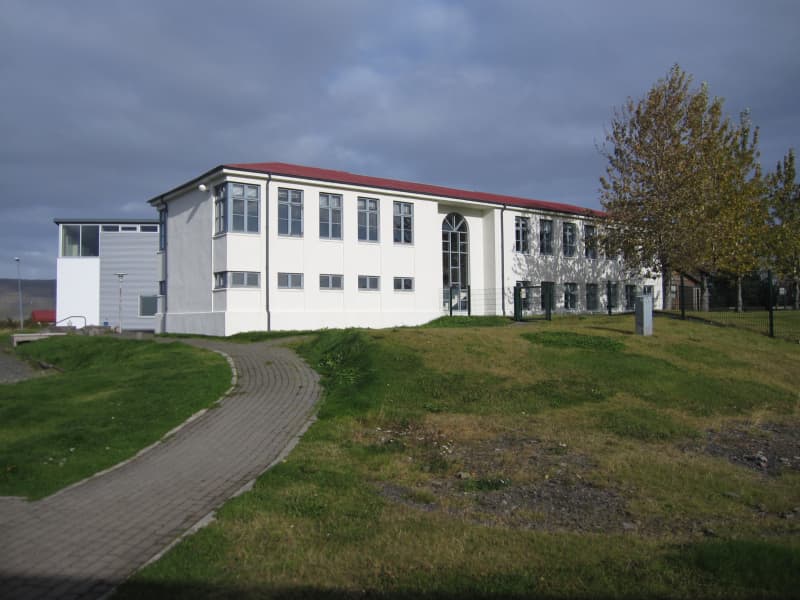
Brautarholt is a small, family-friendly settlement located approximately 85 km from Reykjavík. The village offers a kindergarten, a community center, a swimming pool, and apartment-style accommodation.
Skeiðalaug swimming pool was inaugurated in 1975 following a joint community effort. It was renovated in 2024 and now features hot tubs, a cold plunge pool, an infrared sauna, and a steam room. In 2025, further development took place, adding a modern fitness facility next to the pool.
South Central Apartments is located in the village and offers accommodation, while nearby Hestakráin provides both lodging and dining.
Click here here for a video from small town Brautarholt
View
EYRARBAKKI
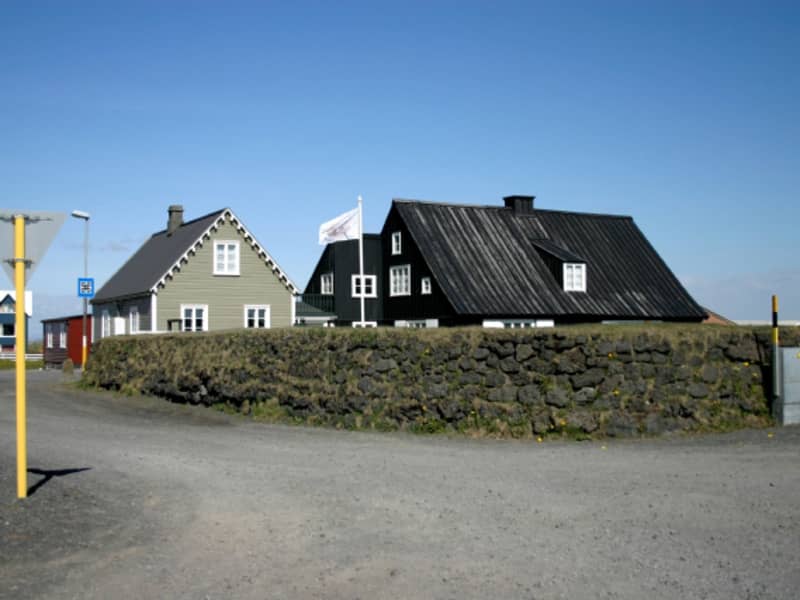
Eyrarbakki, pop. 585 is a friendly village that used to be the largest commercial community and main harbor on the South Coast of Iceland. Many preserved houses from 1890 to 1920 are situated in Eyrarbakki, and a visit is, therefore, like going 100 years back in time. Other great attractions are The Eyrarbakki Maritime Museum and the Árnessýsla Folk Museum, which is located in a building constructed in 1765, famously known as “The House”. Here you can also find a campsite, hostel, guesthouses and a great restaurant. On the rocky shoreline is a fantastic view of the Atlantic Ocean, where you can watch the surf break. It is an ideal spot for hiking and bird watching. Passing the beautiful recreational forest Hallskot northwest of Eyrarbakki, you enter the Flói Bird Reserve. It is a significant nesting area, especially for wetland birds, and is listed as an Important Bird Area (IBA) by BirdLife International.
ÁRBORGThe Municipality of Árborg was established in 1998. It consists of the town Selfoss, the villages of Eyrarbakki, Stokkseyri, and the Sandvík area. This region offers excellent options for recreation and relaxation, including a wide selection of restaurants, cafés, art galleries, museums, swimming pools, and a 9-hole golf course in Selfoss. A perfect location for any visitor who wants to stay closer to nature and explore unique landscapes such as large lava fields and black sand beaches.
View
FLÓAHREPPUR
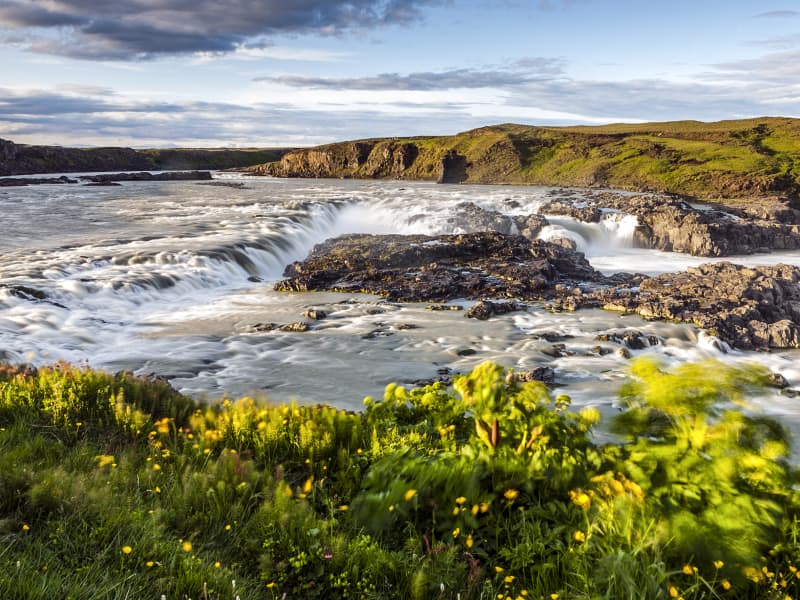
Flóahreppur is a peaceful municipality situated in South Iceland, between the two large Salmon Rivers Hvítá and Þjórsá. Flóahreppur is famous for its wide panorama view in all directions, range of mountains, glaciers, and islands. In the area is Iceland´s most voluminous Waterfall Urriðafoss, where Þjórsá River falls off the margin of Þjórsárhraun a Lava Field that came about 8.000 years ago and is one of the largest known Lava-flows anywhere on Earth. Flóahreppur is a paradise for people who love nature and bird-watching. Bird-life around the area has great variety and is an interesting choice for bird-watchers. Here you can see Icelandic birds in their natural environment without any difficulties. Flóahreppur is also ideal for walking, cycling, and riding.
Culture in the area has historical deep roots and great emphasis is placed on the preservation of cultural heritage, whether it is crafts, inventions, history, traditional farmhouses, or churches. In Flóahreppur you will find a variety of recreational possibilities and services such as accommodations, museums, craft workshops, farm lodgings, and country boutiques – to name a few. Flóahreppur is a vibrant community with a diverse society, which offers a number of events and gatherings, both new and old traditional ones. Flóamanna Saga is one of the Icelandic Sagas and preserves memories of this area.
During the period from mid-September until March/April if you are lucky you might see pink clouds dancing around the sky just like a Symphony Orchestra playing in the sky a breathtaking and unforgettable performance. That´s what we call the Northern Lights some call it Aurora Borealis. That is just one of the Winter-Charms Flóahreppur has to offer. A visit to Flóahreppur is a unique experience that you will not forget. The people of Flóahreppur welcome you to experience our heritage, beautiful and peaceful environment, but first and foremost the wonders of Flóahreppur.
View
FLÚÐIR
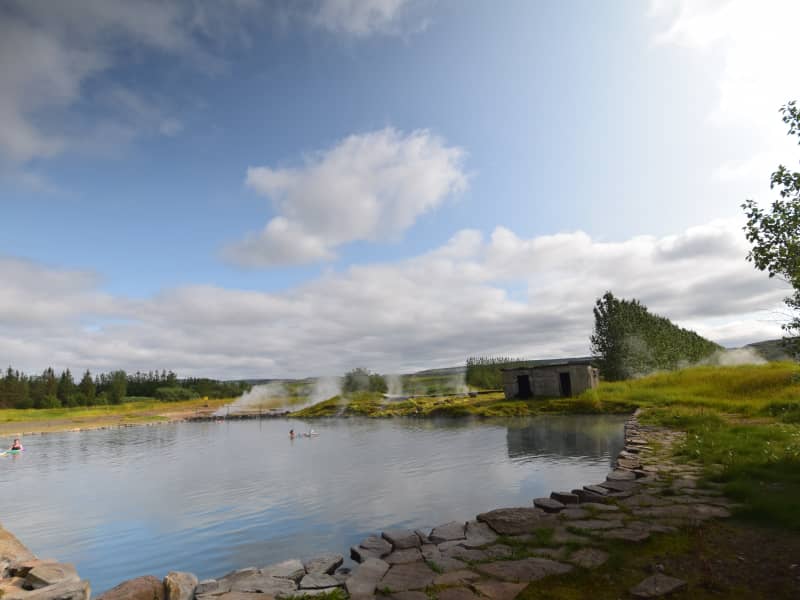
Flúðir is a rapidly growing community in the center of the Hrunamannahreppur district, about 25 minutes off the main Ring Road. The area is considered to be very fertile and beautiful. Litla-Laxá, a clear spring river, runs through the village in an attractive basin. Miðfell, a small mountain, towers over Flúðir and gives the surrounding area a distinctive look. Good walking and riding paths lie to the top of Miðfell. You will find an impressive lake, and from the top, there is an excellent view of the area.
The main sources of employment in Flúðir are services, industry, and horticulture. Geothermal heat is utilized for greenhouses, and there is the biggest mushroom factory in Iceland. The surrounding area is a popular location for summerhouses. Flúðir has excellent services available for visitors. Accommodation, restaurants, grocery store, camping ground, swimming pool, golf course, football golf, horse rental, and The Secret Lagoon.
View
HELLA
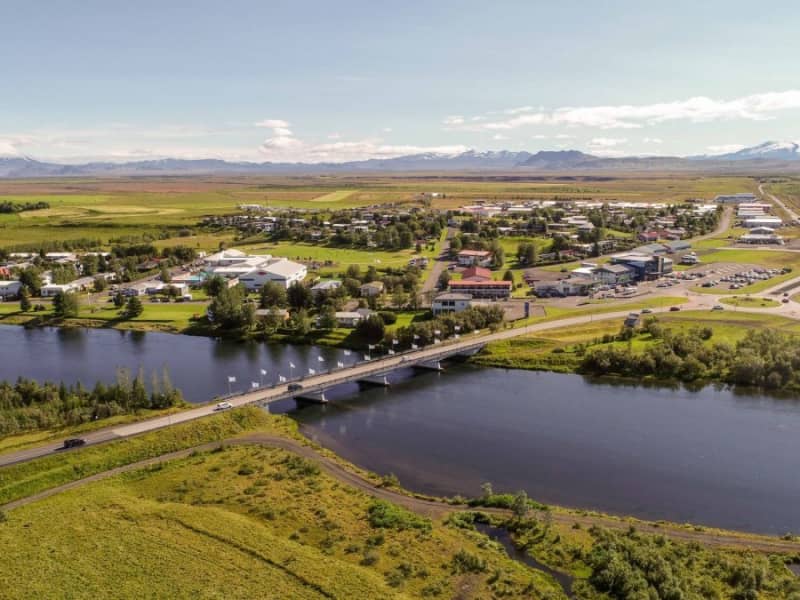
Welcome to Rangárþing ytra, one of Iceland’s largest municipalities in terms of geographical size, with around 2000 residents. It is one of three municipalities in the county of Rangárvallasýsla, which lies across the middle of South Iceland and has many unique natural resources in the lowlands and highlands.
The volcanic zone lies across the municipality, including one of Iceland’s most active volcanoes, Hekla, which stands at 1,491 m above sea level and has erupted six times over the last century, in 1947, 1970, 1980, 1981, 1991, and 2000. Some geothermal heat can be found in the region, not least in the area around Torfajökull, one of Iceland's most geothermally active areas.
The Veiðivötn lakes are located in Landmannaafréttur. Thousands of fishermen descend there every year, as the lakes are rich with Arctic char and trout. The Landmannaafréttur Fishing Association oversees aquaculture in Veiðivötn.
Ytri-Rangá, a popular fishing river, flows through the municipality. It´s one of the best salmon rivers in the country.
Many popular hiking trails can be found in Rangárþing ytra; the best known is Laugavegur. Another hiking trail, less known, is Hellismannaleið. Both are equally interesting.
All general services can be found in Rangárþing ytra, and the level of service is very high. The municipality has two nursery schools and two elementary schools, a healthcare centre, two swimming pools, grocery shops, a bank, auto repair shops, hotels, and a nursing and residential home.
The Icelandic horse has a place of honor in Rangárþing ytra, and activities related to the Icelandic horse are various. Other activities are, e.g., museums, Buggy tours, jeep tours, and fishing.
Further information on interesting places and activities can be found on this website.
Íslenska
View
HÖFN
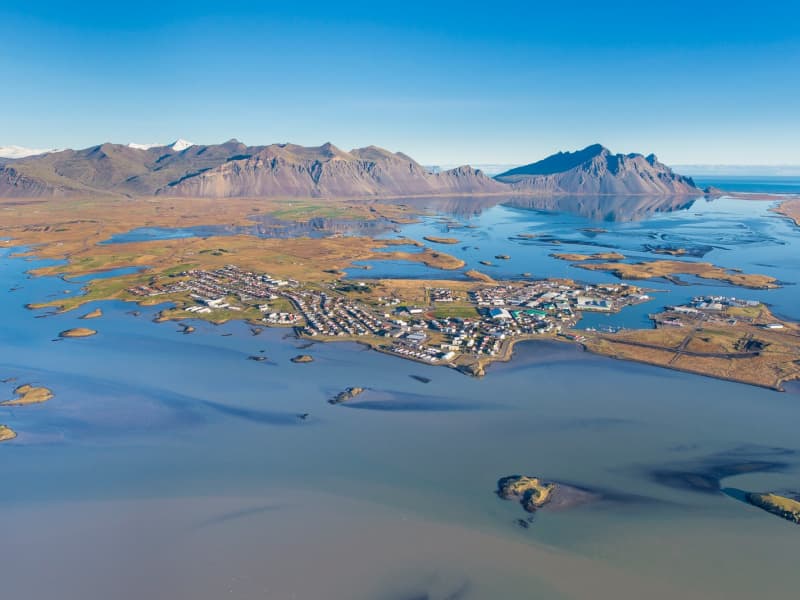
Hornafjörður is a blooming community close to the biggest glacier in Europe, Vatnajökull in the southeastern part of Iceland. The district’s most densely populated area is Höfn. In this region, you are located at the base of Vatnajökull, and the scenery is breathtaking. Vatnajökull National Park, the largest national park in Europe, is situated in the community. In the last few decades, tourism has grown enormously and has, in fact, become a major economic sector in the community. Diverse services are provided, including hotels, camping sites, restaurants, shops, swimming pools, golf courses, marked hiking trails, and various museums, such as a maritime museum, two national park visitor centers, and the center of the great writer Þórbergur Þórðarson.
Höfn’s growth in the 20th century from a small village to today’s town was a result of the development of a relatively diverse fishing industry. The landed catch is now more varied than in other fishing towns, including high-value species such as the Norway lobster (Nephrops norvegicus), but a good part of the Icelandic lobster catch is landed at Höfn. In recent years the town has promoted lobster as a central part of its image, for instance with a "lobster festival" that is held each summer. Höfn actually means harbor, though repeated dredging has proved necessary to keep the entrance of the harbor safe from sand deposits.
View
HVERAGERÐI
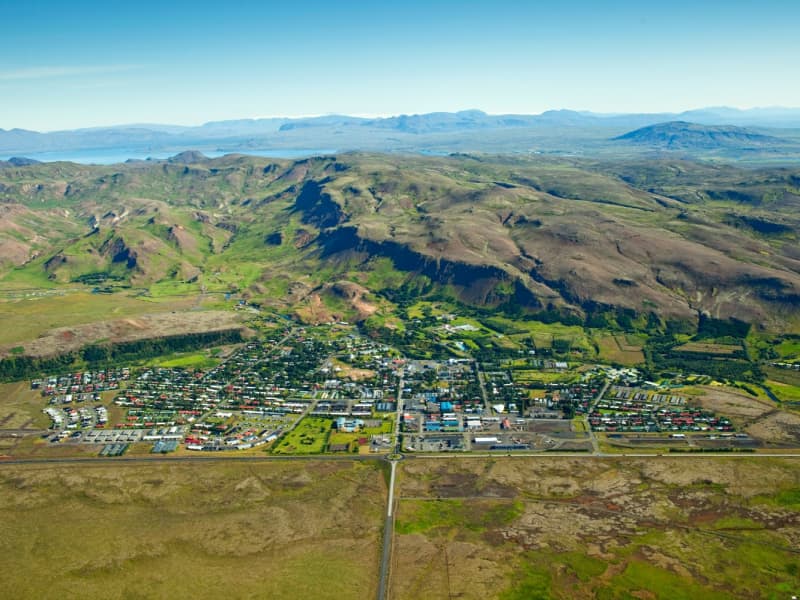
Hveragerði has long been a famous destination for tourists with many hotels and restaurants. Both summer and winter, Icelanders and foreigners alike have enjoyed visiting the town for decades. With a population of about 3.000 and located only 45 km from Reykjavik, Hveragerði is a town not to be missed. It may be viewed from the vantage point of the Kambar mountain slope, as it spreads out across a 5000-year-old lava field. Throughout the year, pillars of steam may be seen rising from the town – and in summer, it is truly a green community, abounding in trees. A green revolution is taking place as woodland areas in and around Hveragerði expand, with the locals working together to develop their blossoming town further.
Indeed, the most precious gem of the town of Hveragerði is its geothermal area – indeed, there are not many communities in the world with hot springs literally in their backyard. The geothermal area is securely fenced off for safety reasons. Still, it can be visited during opening hours listed on the park's Facebook page - https://www.facebook.com/Geothermalpark or by emailing tourinfo@hveragerdi.is for more information and group bookings.
A new hot spring area emerged from the ground in the earthquake that shook Iceland's southern part on 29th May 2008. It is situated on the hillside rising above the town.Several very active hot springs throw colorful mud and clear water up into the air and are a spectacular sight.
Besides the hot springs, Hveragerði has much to offer. Trout and salmon swim in the Varmá river, berries are for picking on the heath to the west of the town, and the area abounds with excellent walking routes, the most famous one being the hike to Reykjadalur valley where one can bathe in a hot river. The swimming pool is a gem in town with hot baths, whirlpools, a natural sauna, and a fitness center. Also, the NLFÍ Health and Rehabilitation Clinic offers opportunities to seek health and happiness.
LÁ Art Museum is situated in Hveragerdi. It is an art museum that preserves a small collection of modern and contemporary art, mainly from Icelandic artists and some international artists' work. Every year, the museum puts up a variation of repeatedly awarded exhibitions.
View
HVOLSVÖLLUR
Hvolsvöllur – Rangárþing eystra with a population of about 2000, is a vast district in central South Iceland and ranges from the highlands to the sea. It boasts a great number of geological wonders, a fact which led the area to be a part of Katla UNESCO Global Geopark along with two other districts to the east: Mýrdalshreppur and Skaftárhreppur. Rangárþing eystra is known for its many beautiful nature scenes like the waterfalls, Skógafoss and Seljalandsfoss, Þórsmörk which is a paradise for hikers, and the famous volcano Eyjafjallajökull.
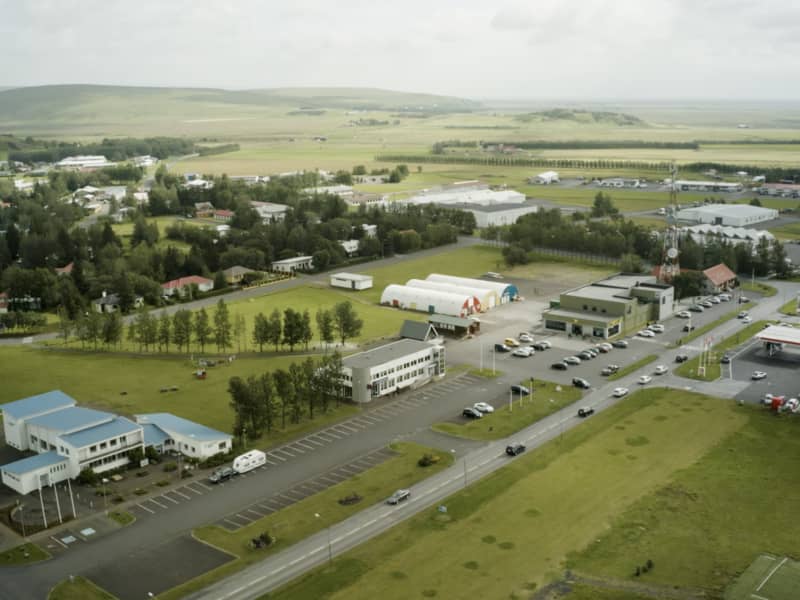
The district's most densely populated area is the town Hvolsvöllur with about 1000 inhabitants. Hvolsvöllur's primary businesses are services for agriculture, their surrounding areas, and the tourism industry. Hvolsvöllur is in fact the only town in Iceland that has not been established by the sea or a river, but entirely as a center of service for the area. Only about 100 km from Reykjavík, Hvolsvöllur is an excellent location from which to base for exploration of South Iceland. Its central location makes it ideal for day trips in the region and then back for a good night’s sleep in one of the area’s many types of accommodation. You can find a lovely green area in the center of town where you can stretch your legs, let your kids play and enjoy a picnic and each summer you find there an outdoor exhibition by local area photographers. Only 30 minutes from Hvolsvöllur you can find Landeyjahöfn from where you take the ferry to Vestmannaeyjar.At Hvolsvöllur you can visit The LAVA center, which is an interactive, high-tech educational exhibition depicting volcanic activity, earthquakes, and the creation of Iceland. You can walk up on the roof of the building and the view is breathtaking. At Hvolsvöllur you can also visit a local product store, Una, where you can find fresh vegetable, meat and all kinds of local arts and crafts. In Una you can also enjoy art exhibitions like pictures from Njálurefillinn which is a 90m tapestry where you can see the story of Brennu-Njálssaga.At Hvolsvöllur there is a bank, a hotel, guesthouses, camping sites, restaurants, shops, a pharmacy, a healthcare center, a fully equipped sports center, a swimming pool, car services, a rescue team, gas stations and other businesses and public services.
View
KIRKJUBÆJARKLAUSTUR
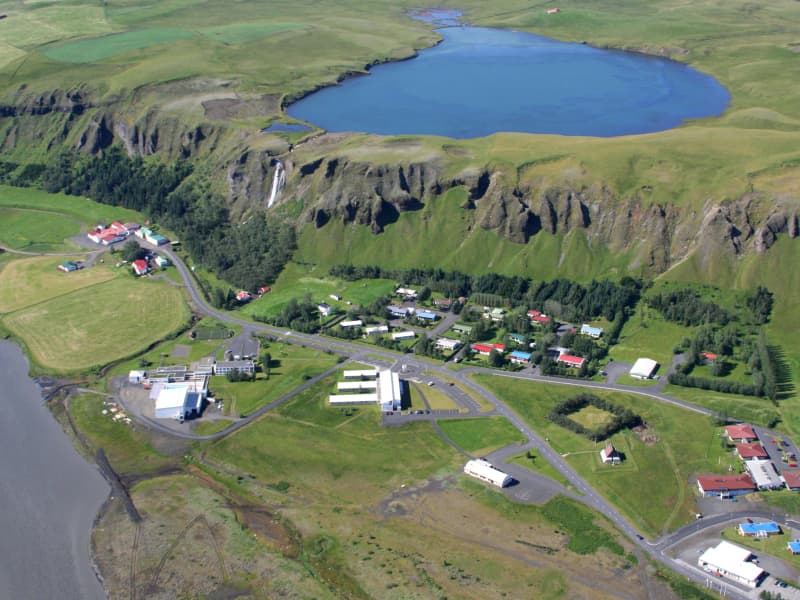
SkaftárhreppurSkaftárhreppur district is the center of the south of Iceland and the perfect location to stay while taking day tours to see many of Iceland's best known natural treasures, Skaftafell, Jökulsárlón glacier lagoon, Langisjór lake, Eldgjá fissure, Laki craters, the lava field Eldhraun and Fjaðrárgljúfur. The easy but very interesting 5 km hike trail is Ástarbrautin (The Love Path in Kirkjubæjarklaustur). This is an area where saga meets lava. On the web eldsveitir.is you can find more about history, culture and the nature in the area. The district is part of Katla geopark and the gateway to the western part of Vatnajökull National Park.
Kirkjubæjarklaustur - SkaftárhreppurKirkjubæjarklaustur was known in olden times as "Kirkjubær" (Church Farm) and was an important farming estate. It is one of the most tongue-twisting words to pronounce of any location in Iceland. Kirkjubæjarklaustur has developed into a village, the only center of population in the district, with about 150 inhabitants. Kirkjubæjarklaustur, often abbreviated to "Klaustur", is centrally located in the district. Roads radiate from Klaustur in many different directions and the Ring Road runs through the district. The Fjallabak roads (north and south) lead from the Ring Road into the interior via Skaftártunga. The Laki road, just west of Kirkjubæjarklaustur, leads into the highlands.
Nearby tourist attractions include the Laki craters, the Eldgjá, and Skaftafell. Near the Ring Road, you find Fjaðrárgljúfur, accessible all year round. An attraction close to the village is Kirkjugólf (Church Floor), a natural pavement of basalt. These are basalt columns down in the earth, eroded and shaped by wind and waves, but only the top can be seen, and they, as the name suggests, have the appearance of a paved church floor. It is a protected natural monument. This lava formation has similar origins as the Giant's Causeway in Ireland. All these attractions contribute to the popularity of Kirkjubæjarklaustur as a stopping point for tourists.
View
LAUGARÁS
Laugarás is a vibrant village in South Iceland known for its geothermal energy, lush greenhouses and great visitor services. The newly opened Laugarás Lagoon offers a relaxing geothermal bathing experience, with the restaurant Ylja located on-site. Nearby you’ll also find Slakki, a charming petting zoo popular with families.
The area offers a wide range of accommodation options — including campsites, guesthouses and hotels — making it an ideal stop on the Golden Circle. Laugarás is also close to many cultural and natural attractions, such as the historic bishop’s seat Skálholt, one of Iceland’s most important heritage sites.
Fishing enthusiasts will enjoy the proximity to the famous Iða salmon river and the scenic Brúará, both offering memorable angling opportunities.
View
LAUGARVATN
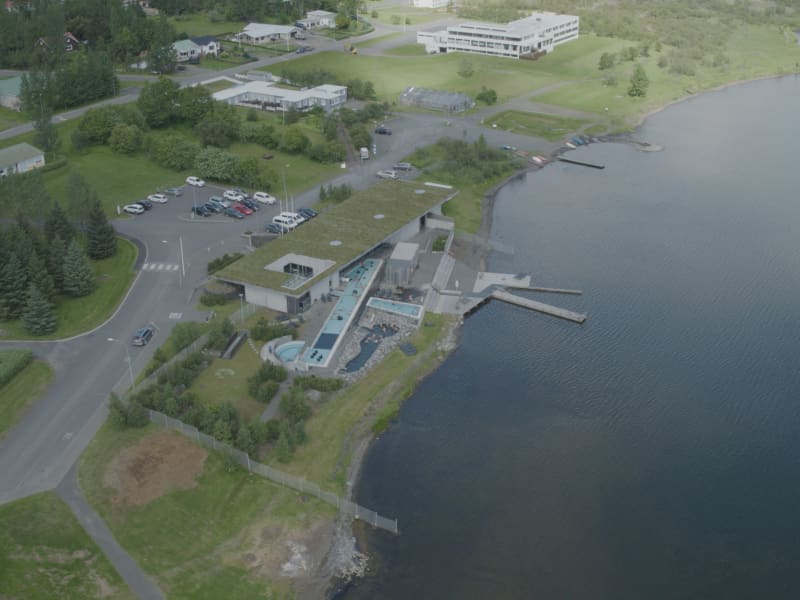
Laugarvatn is a shallow lake, about 2 km2 in size, and is located in the inlands of Árnessýsla, midway between Þingvellir, Gullfoss, and Geysir, 100 km from Reykjavík. Under its floor, there are hot springs heating the lake so it is warm and suitable for bathing all year round. On its bank rests a village of over 300 inhabitants, also named Laugarvatn.
The Laugarvatnsfjall mountain with its birch-covered slopes on the west shelters the village and also adds to the charm and beauty of the place. Between the mountain and the lake, north of the village, there is a panoramic point (hringsjá) providing a good view of the lake and its surroundings. In addition, amongst the green hills and woods north of the lake the area is suitable for camping, pony-trekking, and hiking. Nearby you will find a lot of marked hiking routes.
It is possible to hire a boat or a sailboard to use at lake Laugarvatn. Just outside Laugarvatn there is a golf course and possibilities of angling in lakes and rivers in the area. Laugarvatn is a popular tourist resort for Icelanders, and it is also the site of educational institutions, as for example the Grammar School of Laugarvatn. There are two Edda Hotels located there as well.
View
ÖLFUS
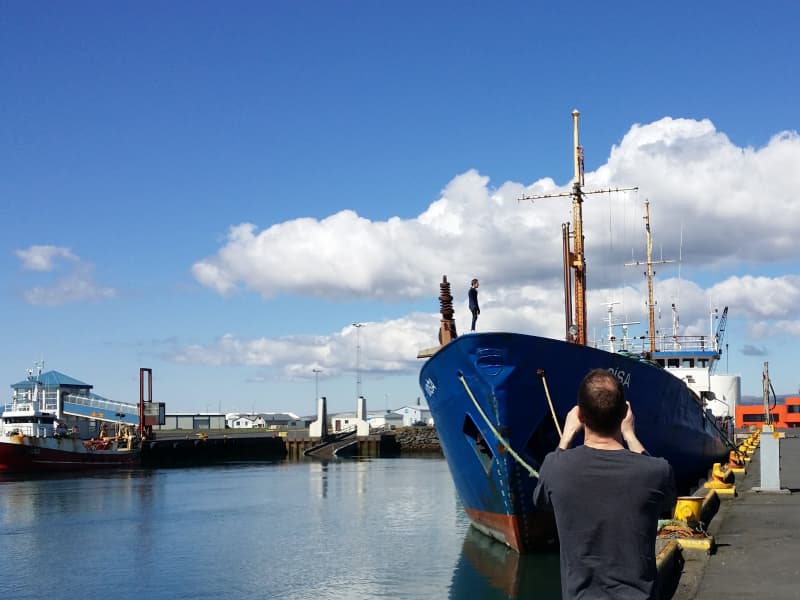
Ölfus municipality is located on the southwest coast of Iceland, approx. 50 km from Reykjavík capital. The population is slightly over 2000 inhabitants and is growing. The fishing village Thorlákshöfn is the largest in the municipality with approx. 1600 inhabitants.
Ölfus offers a wide range of beautiful landscapes with black sand beaches, cliffs, lava formations, caves, geothermal areas, and vivid hot springs.
From Thorlákshöfn village and all over the municipality, you have sensational panoramic views over most of the south coast, e.g., the volcanoes Mt. Hekla and Eyjafjallajökull and the Westman Islands.
In Thorlákshöfn, you can find the best surfing spot in Iceland. The black sand beach is perfect for beginners and advanced surfers, and the waves by the lighthouse are superb.
Ölfus municipality is a popular viewing point for the Northern Lights in the south due to limited light pollution.
The tourist information center is located in the library in Thorlákshöfn and is open from 12:30 to 17:30 on weekdays. The campsite in Thorlákshöfn is next to the church, behind the swimming pool.
The tourist information center in ThorlákshöfnHafnarberg 1815 ThorlákshöfnTel. +354 480 3830Opening hours: Weekdays from 12:30 – 17:30
View
REYKHOLT
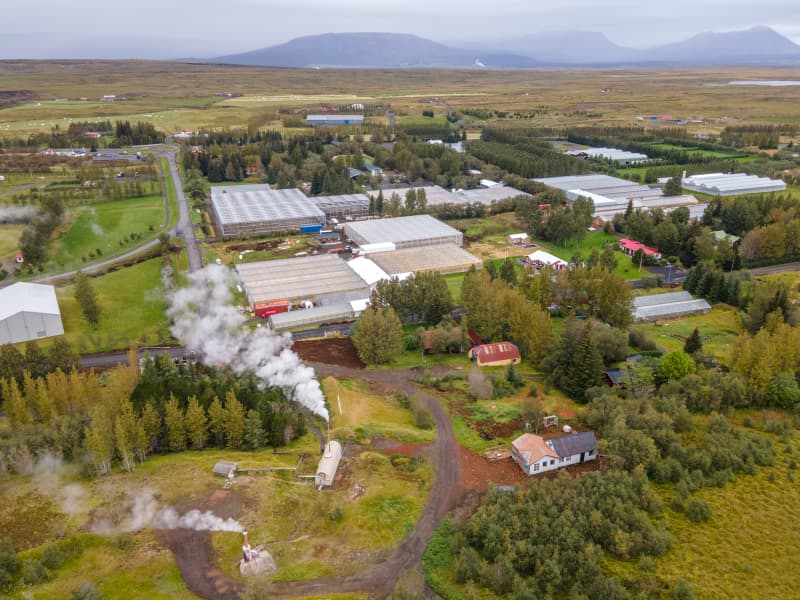
The development of the small village Reykholt started in the first half of the 20th century when geothermal activity was discovered in the area. There are numerous horticultural farms in the region and increasing services; grocery store, swimming pool, guesthouse, campsite, horse-shows, and greenhouse visits for groups.
Here is a video from Reykholt in South Iceland.
View
SELFOSS
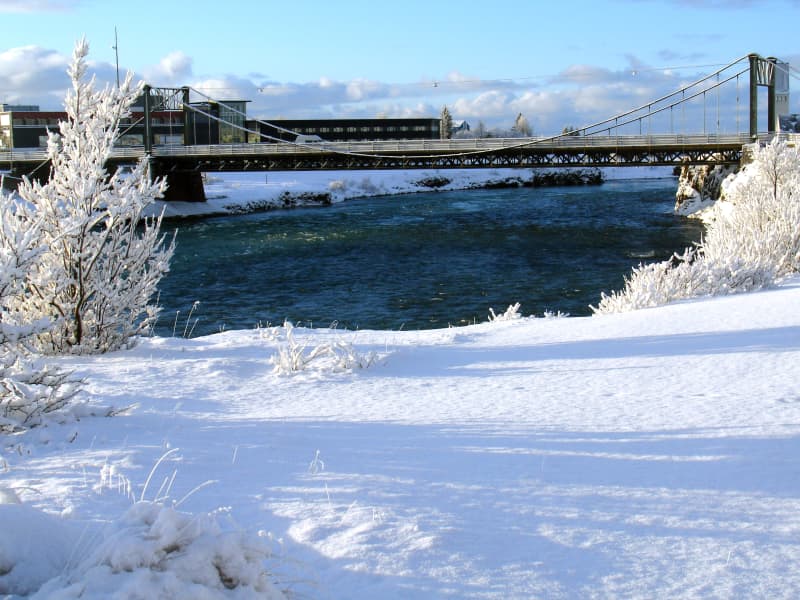
Selfoss, pop. 8.832 is the largest town in South Iceland and the main center of trade and industry. The distance from the capital is 57 km and various options are available for anyone who wants to stay in this friendly town. A number of restaurants and cafés are situated in the heart of Selfoss, along with various kinds of shops. The town also has an outdoor swimming pool with a sauna and hot tubs. North of Selfoss you will find the recreation forest of Hellisskógur with interesting footpaths alongside Ölfusá River. On the far side bank of that same river, you can also find a 9-hole golf course. In Selfoss, you can find all types of accommodation.
ÁRBORGThe Municipality of Árborg was established in 1998. It consists of the town Selfoss, the villages of Eyrarbakki, Stokkseyri, and the Sandvík area. This region offers great options for recreation and relaxation including a wide selection of restaurants, cafés, art galleries, museums, and swimming pools, as well as a 9-hole golf course in Selfoss. A perfect location for any visitor who wants to stay closer to nature and explore unique landscapes such as large lava fields and black sand beaches.
The Árborg area has a population of 10.346 people (September 2020).
View
SKÓGAR
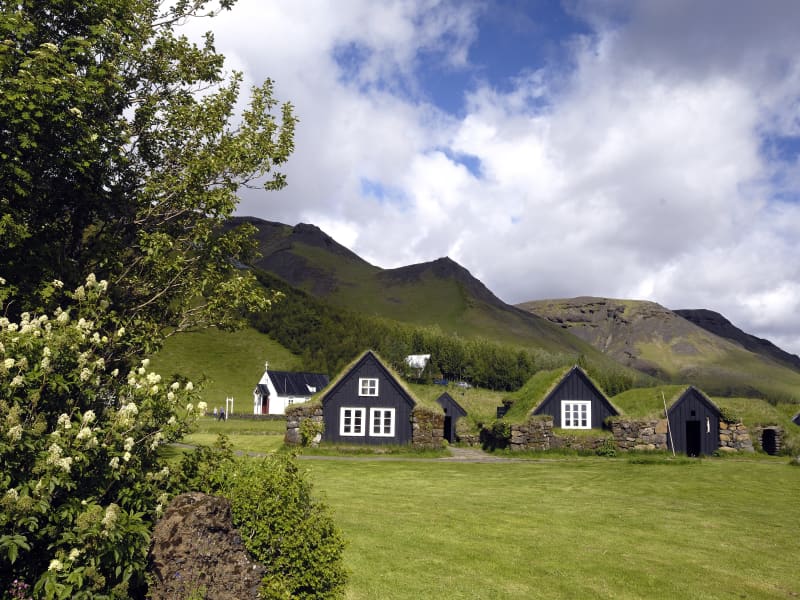
Skógar is a small village with about 25 inhabitants. Despite its small size, it has various accommodation and restaurant possibilities. Skógar used to be known for its school and the main school building is the most important building of Skógar, built-in 1949. The school building is now a hotel. Skógafoss waterfall is one of the most popular waterfalls in Iceland. Situated next to the stunning Skógafoss waterfall in extraordinarily beautiful natural surroundings, the Skógar Folk Museum preserves the cultural heritage of Southern Iceland through its collection of tools and equipment, handicrafts, old buildings, books, manuscripts, and documents. It also has a museum of transports. Above the museum and old school building, there is the Völvuskógur forest which has various trails. One of the most popular trails at Skógar though is the Fimmvörðuháls trail which starts at Skógar and goes between the Mýrdalsjökull and Eyjafjallajökull glaciers and descends in Þórsmörk.
View
SÓLHEIMAR ECO-VILLAGE
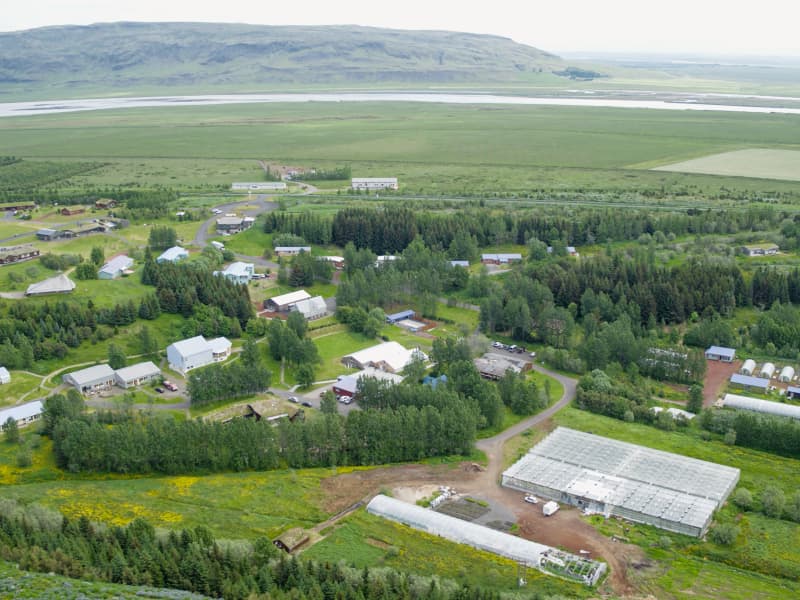
Sólheimar is considered the oldest Eco-Village in the world. Sólheimar was established as a children's home in 1930. Still, today, Sólheimar focuses on offering people with special needs varied and creative employment opportunities, jobs in organic horticulture and forestry in a close-knit community that focuses on environmental issues and vivid cultural life. Sólheimar workplaces include six creative art workshops, Ölur - organic forestry, Sunna – organic horticulture, Brekkukot Guesthouse and catering service, and Graena Kannan – organic café. All products are sold in the Vala grocery store and art gallery.
View
STOKKSEYRI
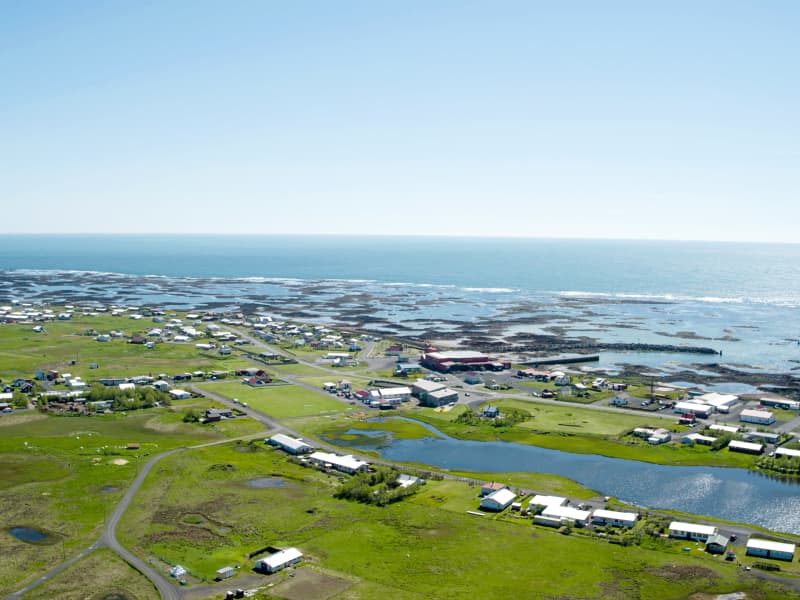
STOKKSEYRIStokkseyri, pop. 559 is a charming village renowned for its beautiful seashore, breaking ocean waves and birdlife, and rich in handicrafts and culture. Workshops, galleries, Ghost Center, and the Elves and Northern Lights Museum are all located in a Cultural Centre, Menningarverstöðin, an old fish processing factory that has found a new role due to changes in the fishing industry. The Wildlife Museum is dedicated to hunting and wildlife and contains many mammals and birds. The bunkhouse Þuríðarbúð provides an excellent example of how fishermen had to make use of what nature provided. Stokkseyri also offers one of Iceland's most famous seafood restaurants, an outdoor swimming pool, kayak tours, and a campsite. East of Stokkseyri is Knarrarósviti Lighthouse, built-in 1938 and put into operation a year later. For further information, visit the tourist information at the local Café, Gimli Kaffihús.
ÁRBORGThe Municipality of Árborg was established in 1998. It consists of the town Selfoss, the villages of Eyrarbakki, Stokkseyri, and the Sandvík area. This region offers excellent options for recreation and relaxation, including a wide selection of restaurants, cafés, art galleries, museums, swimming pools, and a 9-hole golf course in Selfoss. A perfect location for any visitor who wants to stay closer to nature and explore unique landscapes such as large lava fields and black sand beaches.
View
ÞORLÁKSHÖFN
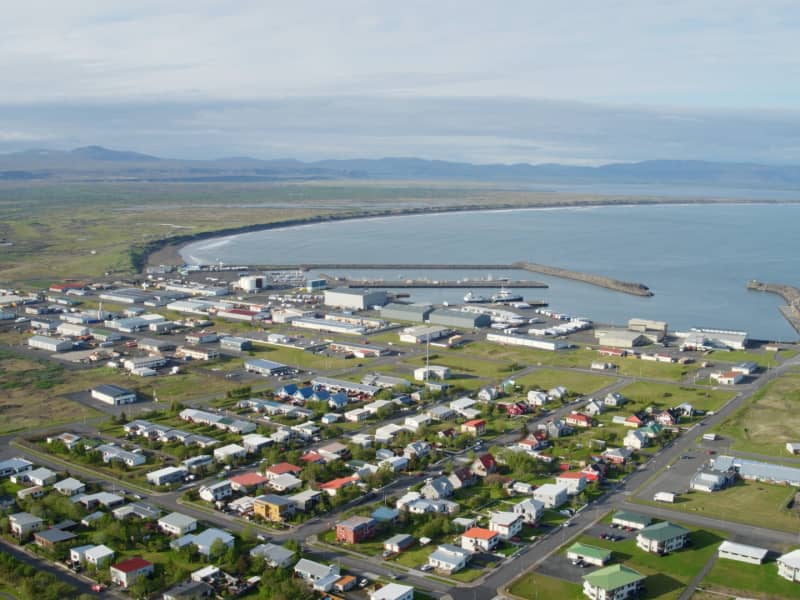
The main town in Ölfus is Þorlákshöfn, west of Eyrarbakki. The town is important as a port because the only viable harbor on Iceland's southern coast between Grindavík in the west and Höfn in the east is situated there. The town has a population of about 1500 people.
The industrial foundations in Þorlákshöfn are ship-outfitting and fish processing factories, with business and service industries growing fast. Leisure opportunities for tourists are excellent, with an outdoor swimming pool with hot baths, a steam bath, and a brand new waterslide. A good campsite is next door to the pool, with indoor cooking facilities and spaces for mobile homes. From the swimming pool you can select many walking routes in the surrounding area and long walks along the coast, leading all the way to Selvogur and Herdísarvík, and along the beach leading to Óseyrarbrú and Eyrarbakki. In the Egilsbúð library and museum items that tell the story of the development of the town are to be found.
The town church in Þorlákshöfn is built in a unique style, and Strandarkirkja church in Engilsvík in Selvogur is famous as a place for vows. Anyone wishing to go caving has the Raufarhólshellir caves, which are some 1360 meters long. Duggan in Thorlákshöfn and Skíðaskálinn in Hveradalir offer many services to travelers, among them food and drink. Many scenes in the epic blockbuster movie "Flags of our Fathers" (directed by Clint Eastwood and produced by Steven Spielberg - 2005) were filmed on the black beaches close to Þorlákshöfn. There are also plans to construct a big international golf course close to Þorlákshöfn.
View
ÞYKKVIBÆR
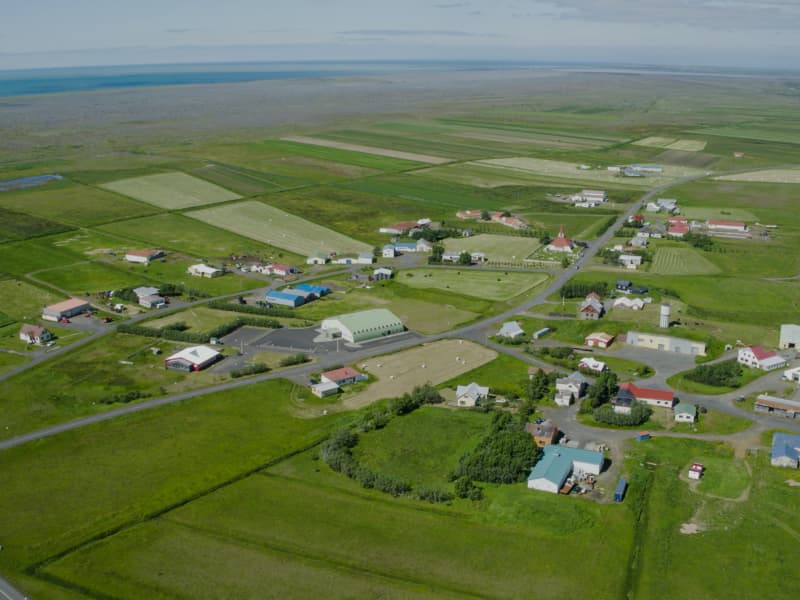
Residential area by Hólsá and south of Safamýri. Before, Þykkvibær was flooded in every way. People had to wade up to the waist or deeper to get between towns and it was difficult to deal with haymaking. In addition, the lakes broke the land. In 1923, a powerful prelude was built across Djúpós and is now a road along the dam.
The settlement is old in Þykkvabær, first mentioned around 1220. Before that, there was some erosion from the sand. A primary school was established in Þykkvabær in 1892 and it was the first rural school in Rangárvallasýsla. After making the dam for Djúpós, horticulture increased and Þykkvibær is a picturesque place in every way.
Þykkvibær is now known in Iceland for growing potatoes.
View
VESTMANNAEYJAR (WESTMAN ISLANDS)
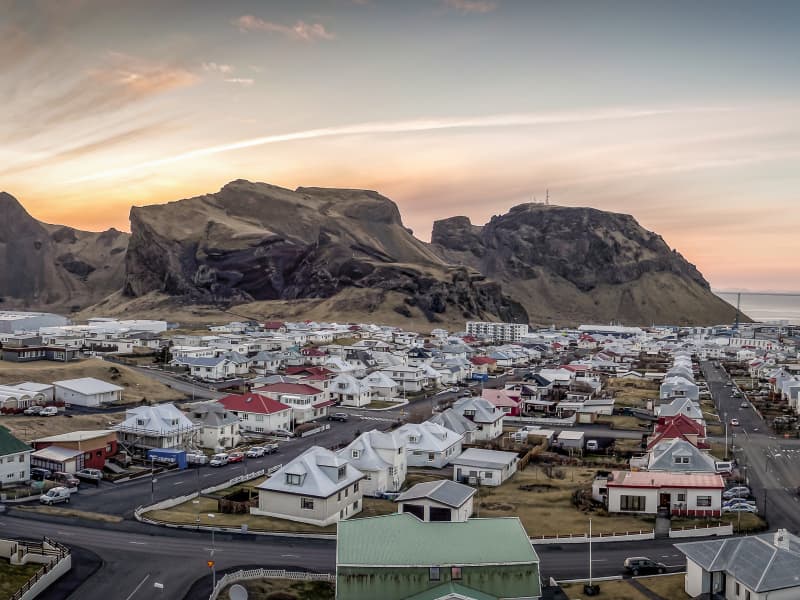
The Westman Islands are a group of islands off the south coast of Iceland. They consist of 15 islands in addition to 30 cliffs and skerries that make up the archipelago. Heimaey is the only island inhabited all year long.
The first sources of the Westman Islands can be found in Landnáma, a medieval Icelandic written work that describes the settlement of Iceland. Landnáma tells the story of Ingólfur Arnarson, Iceland’s first settler. His foster brother, Hjörleifur Hróðmarsson, was killed by his slaves. The slaves fled to the islands but Ingólfur Arnarson hunted them down and killed them. These slaves, originated from Ireland, were known as the West Men, thus the name, the Westman Islands. Still today, many places in the Westman Islands bear names from the event.
The first settler of the island of Heimaey was Herjólfur Bárðarson, who lived in the valley Herjólfsdalur, approx. in the year 900.
Three times in the history of the Westman Islands, the population has taken considerable dives. First in the year 1627 during the events known as The Algerian Pirate Raid when 234 people were captured by pirates from Algeria. The islanders also suffered greatly in the early 18th century, when more than half of all newborns died from neonatal tetanus. Lastly, the population of the Westman Islands went from 5100 to 200, temporarily, during the 1973 volcanic eruption, as all the inhabitants fled to the mainland. Today around 4.300 people live in the Westman Islands.
There are two ways to get to Vestmannaeyjar, by ferry or by plane. The ferry Herjolfur sails up to five times a day from the harbor at Landeyjahöfn to Vestmannaeyjar and back again. The ferry ride takes approximately half an hour. Make sure to book in advance, especially if you intend to bring your car or motorcycle or caravan with you, as the ferry is very popular during summer when Icelanders are on holidays, too. The ferry Herjolfur can be found online and on Facebook if you want to plan your trip early, and there is a bus servicing travelers wanting to get to Landeyjahöfn or back to Reykjavík, as well. Vetsmannaeyjar is only 20 minutes away from Reykjavik by plane. Eagle Air Iceland flies two times a day to and from Vestmannaeyjar. For further information please turn to Eagle Air‘s website where you can get detailed information on flight schedules and prices as well as book online. It’s possible to fly with Atlatsflug from Bakki to Vestmannaeyjar. The tourist information in Vestmannaeyjar is also more than ready to assist you if you have any questions regarding your trip.
Visit Vestmannaeyjar invites you to explore our website and find out what the tourist industry has to offer for our visitors in Vestmannaeyjar. On our site, you will find general information about the members of the tourist industry, services, and upcoming events on the island. You can look for information on how to plan your journey, by ferry or by plane. Entertainment, boat trips, and museums, you will find it in visitvestmannaeyjar.is! If you plan to stay overnight, which we totally recommend, you can find information on accommodation and of course where to dine, restaurants, cafés or just at the typical Icelandic “sjoppa”, we have it all.
View
VÍK
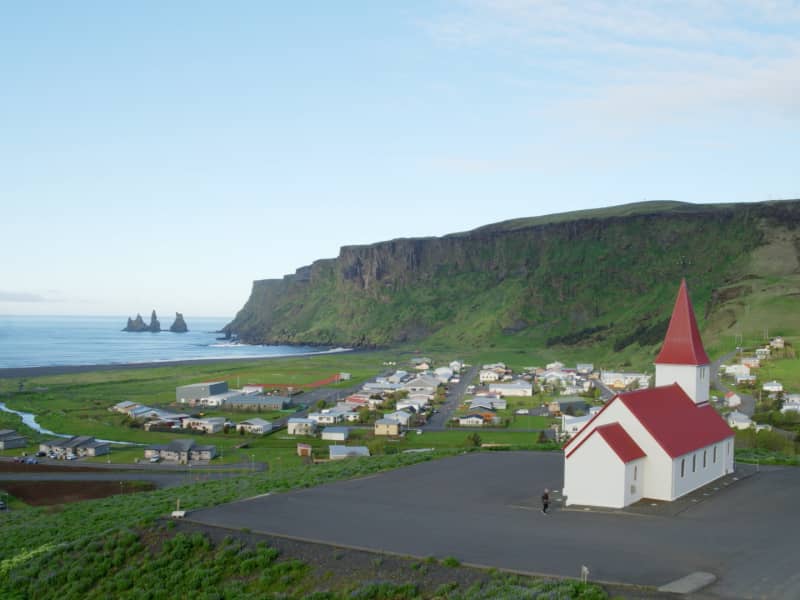
Mýrdalshreppur is one of the three municipalities within Katla Geopark, a UNESCO Global Geopark. Vík in Mýrdalshreppur is situated in the center of the Geopark and is also Iceland‘s southernmost village. The municipalityGeoparkGeopark is bordered by Mýrdalsjökull glacier to the north, Jökulsá River to the west, Blautakvísl River to the east, and black sand beaches to the south. Due to the sandy beaches and rough seas, Vík remains Iceland‘s only seaside village with no harbour. Despite the lack of a port, it has long been an important trading post for farmers along the south coast of Iceland.ActivitiesThe Vík area is truly a place of outdoor adventures. Mýrdalsjökull glacier offers opportunities such as guided glacier hikes, year-round ice cave explorations, glacier-lagoon kayaking, and snowmobiling near Katla volcano. The adrenaline will surely kick in on an ATV tour on the black sand beaches of Sólheimasandur, Zip-lining down a canyon or floating in the air in a thrilling paragliding adventure. For those who prefer to have both feet on the ground, there are numerous hiking routes and a golf course in beautiful scenery on the outskirts of Vík. Lastly, a horse riding tour along the black sand beach overlooking Reynisdrangar sea stacks is an unforgettable experience.Museums and exhibitionsThe Icelandic Lava Show is the only place in the world where you can safely see molten lava at 1100 degrees Celcius. It is a unique exhibition which no visitor should miss. At Katla centre, you will find a free exhibition about Katla volcano and the global Geopark the town is situated in. The town‘s unique seafaring history is depicted in the Skaftfellingur maritime museum, whose centerpiece is undoubtedly the wooden ship Skaftfellingur, used to freight products and people along the harbourless coast until the mid-20th century.HikingNestled between the black sands and the white glacier cap are grassy hills and mountains. A walk up Reynisfjall Mountain is a local favorite, providing views over the Atlantic and proximity to gorgeous bird cliffs. A walk up Hatta mountain will also give you a view over the glacier and Heiðarvatn lake. On Hjörleifshöfði cape, you will find ruins of an old farm and a Viking burial mound. A drive to Þakgil Canyon (accessible in summer only) will provide you with even more hiking opportunities. You will find maps and information about hiking and activities at the Katla information centre at Víkurbraut 28, Vík.
View