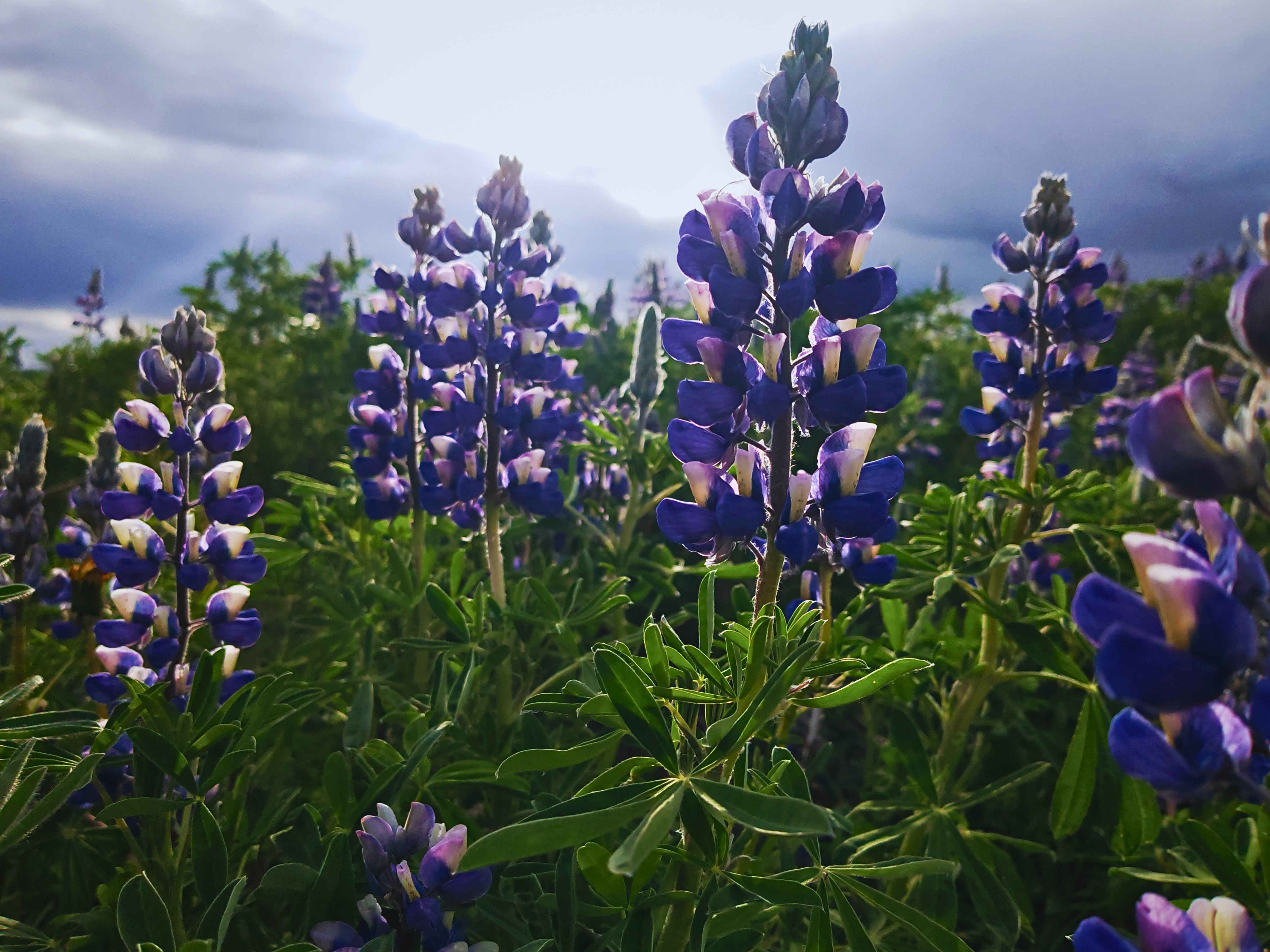
When Do Lupines Bloom in Iceland, and Where Can I Photograph Them?

The lupine has a complicated reputation in Iceland. It was introduced in the mid-20th century to fight soil erosion and has since spread far beyond where it was planted. Conservationists and photographers tend to feel quite differently about it. For visitors, though, the bloom is one of the most photogenic moments of the Icelandic summer.
Where to find lupine fields in South Iceland
You don't have to go looking. During peak season, the lupines find you. Along both the South Coast and the Volcanic Way, you'll pass purple fields stretching out beside the road, often with waterfalls, glaciers, or black sand in the background.
A few reliable spots worth pulling over for:
- Around Vík — the slopes below Reynisfjall and the meadows on the edge of the village fill with lupines in late June and early July. The view back toward Reynisdrangar through a foreground of purple is one of South Iceland's classic summer images.
- Skógafoss area — the fields below and around the waterfall often bloom heavily, making for striking compositions with the falls behind.
- Seljalandsfoss surroundings — patches of lupine grow along the approach and in the fields nearby.
- Eyjafjöll and along Route 1 — long stretches between Hvolsvöllur and Vík are lined with lupine through midsummer.
- Kirkjubæjarklaustur and the area east toward Skaftafell — wide lupine fields against a backdrop of mossy lava and distant glaciers.
- Heimaey in the Westman Islands — lupines grow on the slopes of Eldfell, the volcano that erupted in 1973, creating an unusual contrast of purple flowers against black volcanic rock.
Tips for photographing lupines
Soft light works best. The hours around sunrise and late evening (in June and early July) means very long, golden light thanks to the midnight sun. Midday sun tends to flatten the purple and blow out the sky.
Get low. Lupines look most dramatic when you shoot from near ground level, letting the flowers fill the foreground and lead the eye toward a waterfall, mountain, or glacier behind.
And please, walk around the fields rather than through them. Lupines are tough plants, but trampled patches take a long time to recover and are visible in photographs long after the bloom is over. Stay on existing paths and shoulders.
One thing to know
If you're travelling in late July or August and the lupines look faded or brown, you haven't missed Iceland's summer — you've just missed this particular bloom. The landscape shifts quickly here, and by August the countryside takes on the yellows and reds of late summer grasses and crowberry. Beautiful in its own right, just different.
Be safe
Please don't pull the car over on the shoulder of Route 1 or other main roads to photograph lupines. Traffic moves fast, shoulders are narrow, and sudden stops can cause accidents. You'll almost always find a side road, a turnout, or a small parking area within a kilometre or two, where you can pull fully off the road and walk back to the spot you wanted. The perfect photograph is worth the extra few minutes.